The PCI Design Handbook (MNL-120) represents the authoritative guide for structural design of precast and prestressed concrete members. Unlike cast-in-place design that can sometimes tolerate modest construction variability, precast design must address the complete lifecycle from manufacturing through installation to final performance. MNL-120 provides the engineering framework for designing elements that are both economically competitive and reliably perform under all loading and environmental conditions. The handbook bridges the gap between fundamental structural theory and practical manufacturing constraints, creating designs that are not just theoretically sound but actually buildable and durable. Mastery of MNL-120 methodology separates first-rate precast engineers from those who simply apply generic concrete design principles without understanding precast-specific requirements.
Design Philosophy: From Theory to Buildable Products
MNL-120 begins with a fundamental principle: precast design must integrate structural performance, manufacturing feasibility, transportation logistics, installation safety, and long-term durability into a cohesive system. Generic concrete design can often ignore manufacturing constraints—if an element is difficult to produce, local adjustments are made in the field. Precast cannot operate this way. Elements are remote from the job site, must be transported at significant cost, and must integrate with other precast and cast-in-place elements. Design errors cannot be field-corrected without major delays and expense. MNL-120 methodology forces engineers to think holistically: What will this element experience during manufacturing? How will it be transported? How will it be rigged and installed? What forces will it experience in service? How will it perform for 50+ years in its environmental exposure? These questions drive every design decision.
Load Analysis and Design Approach
MNL-120 covers comprehensive load analysis including permanent loads (self-weight, topping), temporary loads (during handling and installation), service loads (design loads in final position), and environmental effects (temperature, shrinkage, creep). The handbook provides simplified design equations and detailed procedures for complex situations. A critical aspect is recognition that precast elements experience different loading conditions during different lifecycle stages. During handling, elements are supported at specific points and must resist negative bending moments that never occur in final service. During installation, temporary bracing may be inadequate if not designed properly, allowing sway or instability. In service, elements might experience dynamic loads, environmental exposure, and long-term creep that reduce available strength.
- Self-weight and superimposed loads: Accurate calculation of all permanent loads acting on elements
- Handling loads: Analysis of critical loading conditions during manufacture, storage, transport, and installation
- Service loads: Design loads specified by structural engineer for the final structure
- Environmental effects: Temperature variation, shrinkage, creep, differential shrinkage in composite systems
- Load factors and combinations: Application of appropriate factors of safety for different loading scenarios
- Long-term effects: Consideration of time-dependent behavior affecting strength and stiffness
Prestressing Design: Optimization and Practicality
Prestressed concrete provides superior performance for long-span elements, but design requires balancing numerous competing requirements. Initial prestress must be sufficient to control cracking and deflection in service, but excessive prestress increases manufacturing cost and creates handling stresses. Prestressing forces must be maintained through tendons, anchorages, and transfer zones with adequate reinforcement to prevent anchorage failures. Losses due to elastic shortening, creep, and shrinkage reduce available prestress over time. MNL-120 provides detailed guidance on calculating losses and designing transfer zones, which are critical details that separate excellent designs from inadequate ones. Partial prestressing is often more economical than full prestressing, allowing some tensile stress in service while controlling crack widths.
Connection Design: The Bridge Between Elements
Connections are where precast elements become a structure. A perfectly designed element is worthless if connections fail or impose unforeseen loads. MNL-120 addresses connection design philosophy: connections must transfer all required forces reliably, accommodate manufacturing and installation tolerances, allow for disassembly and repair if needed, and function without field adjustments that compromise reliability. Bearing connections must distribute concentrated loads and allow for movement (expansion, settlement, rotation). Moment connections must transfer bending moments while preventing stress concentrations. Tie connections must provide lateral stability and shear transfer between elements. Each connection type requires specific design approach and detailing. Common mistakes include undersizing connections for practical tolerances, failing to provide adjustment capability, or creating stress concentrations through poor detail design.
Manufacturing Considerations: Designing for Buildability
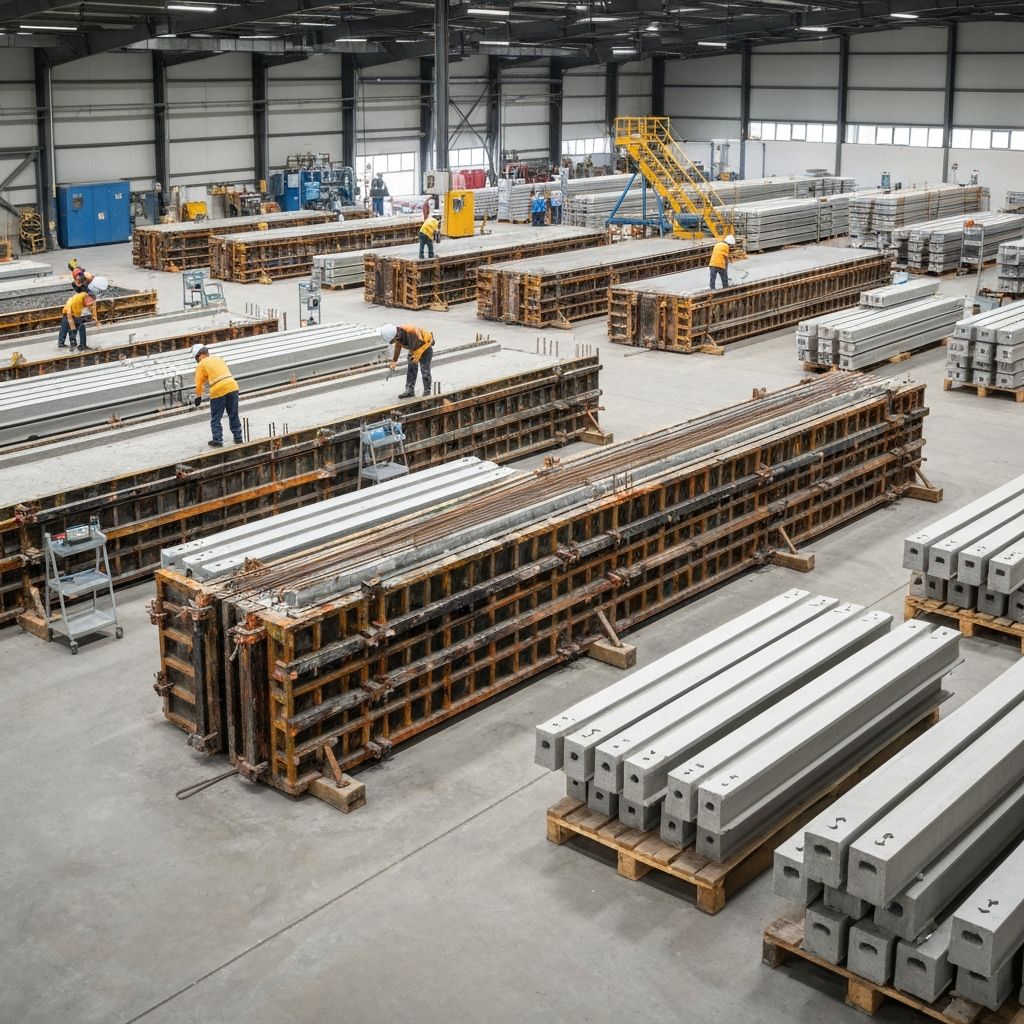
MNL-120 emphasizes that design must accommodate manufacturing processes and equipment available at precast plants. Elements with intricate details, unusual reinforcement patterns, or impractical geometries may exceed plant capabilities or significantly increase manufacturing cost, making the element uncompetitive. Good precast design considers: form design (are forms reusable or single-use?), reinforcement placement (can workers safely position all steel?), concrete placement (can vibrators reach all areas?), demolding approach (will the element demold cleanly?), and handling during production (are embed points adequate?). Elements designed by structural engineers without precast manufacturing experience often require costly modifications or present quality control challenges.
- Form design optimization: Reusable forms reduce per-unit cost; single-use forms may be required for complex geometry
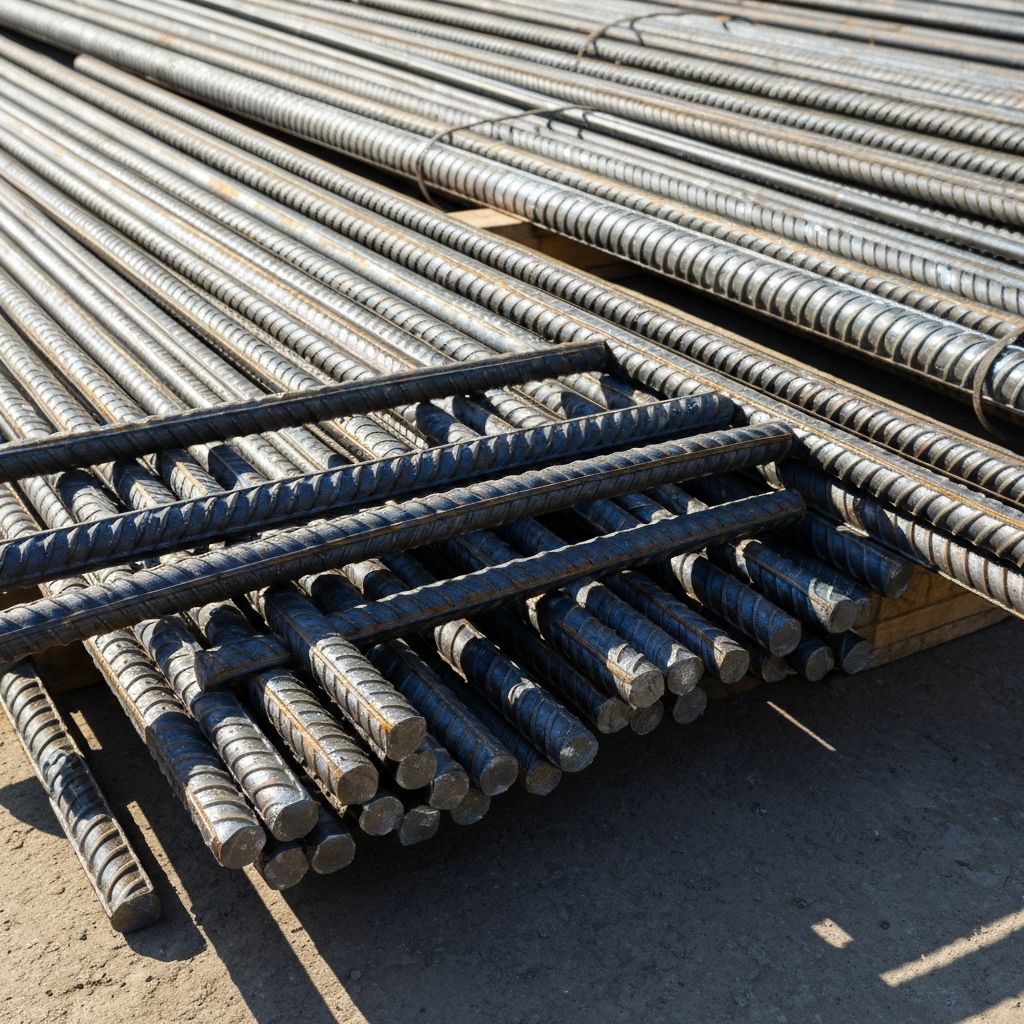
- Reinforcement layout: Steel must be placeable and vibration accessible; congestion creates voids and quality issues
- Embed position tolerance: MNL-116 allows ±12mm manufacturing tolerance; embedment design must accommodate this
- Surface finish requirements: Architectural finishes may require special formwork, release agents, or finishing operations
- Weight and handling: Element weight affects formwork requirements, molding equipment needed, and safe handling capability
- Production sequence: Design should allow efficient production flow without creating handling or storage issues
Durability Design: Long-Term Performance in Service
Precast elements often provide 50+ years of service with minimal maintenance. Durability design ensures this performance. Concrete cover protects reinforcement from corrosion; inadequate cover is one of the most common causes of premature failure. Water-cement ratio affects strength and permeability; lower w/c provides better durability. Air entrainment protects against freeze-thaw damage in northern climates. Supplementary cementitious materials (fly ash, slag, silica fume) improve long-term strength and reduce permeability. Detailing should minimize standing water, provide adequate drainage, and avoid horizontal surfaces that trap moisture. Environmental exposure categories (EN 206 exposure classes or similar standards) drive concrete specification. Interior, protected elements tolerate more aggressive conditions than exposed elements.
- Cover specification: Minimum cover per EN 12390 or ASTM for reinforcement protection
- Concrete quality: w/c ratio, compressive strength, permeability requirements for exposure class
- Air entrainment: Protection against freeze-thaw cycles in northern climates and marine environments
- Supplementary cementitious materials: Improved durability through reduced permeability and densification
- Drainage design: Eliminate standing water and moisture accumulation that accelerates degradation
- Joint and seal design: Prevent water ingress at connections and boundaries
Composite System Design: Integrating Precast and Cast-in-Place
Modern precast systems often combine precast elements with cast-in-place topping (for floor systems) or cast-in-place columns/walls. Composite action between precast and topping provides superior strength and stiffness compared to precast elements acting independently. However, achieving composite action requires proper design and construction. Adequate shear connection (through roughened surfaces, embedded steel, or mechanical connectors) must transfer forces between precast and topping. Timing of topping placement affects whether precast camber and deflection are recovered. Differential shrinkage between precast (aged) and topping (new) creates internal stresses. MNL-120 provides detailed analysis of composite system behavior, loss of composite action, and design procedures for systems with partial composite action.
Practical Design Challenges and Engineering Judgment
MNL-120 provides methodology and design equations, but engineering judgment determines whether designs are practical and economical. Common challenges include: (1) Balancing strength requirements with serviceability limits—a strong beam might deflect excessively in service; (2) Managing prestressing forces during transfer and service—initial stresses create handling challenges; (3) Designing connections that are both economical and reliable; (4) Accommodating complex loading in residential or commercial elements; (5) Managing temperature effects in long elements. Experienced precast engineers develop intuition for practical designs that satisfy structural requirements without creating manufacturing difficulties. Design reviews with manufacturing engineers and installers often identify improvements that reduce cost or improve constructability without compromising performance.
Design Documentation and Quality Assurance
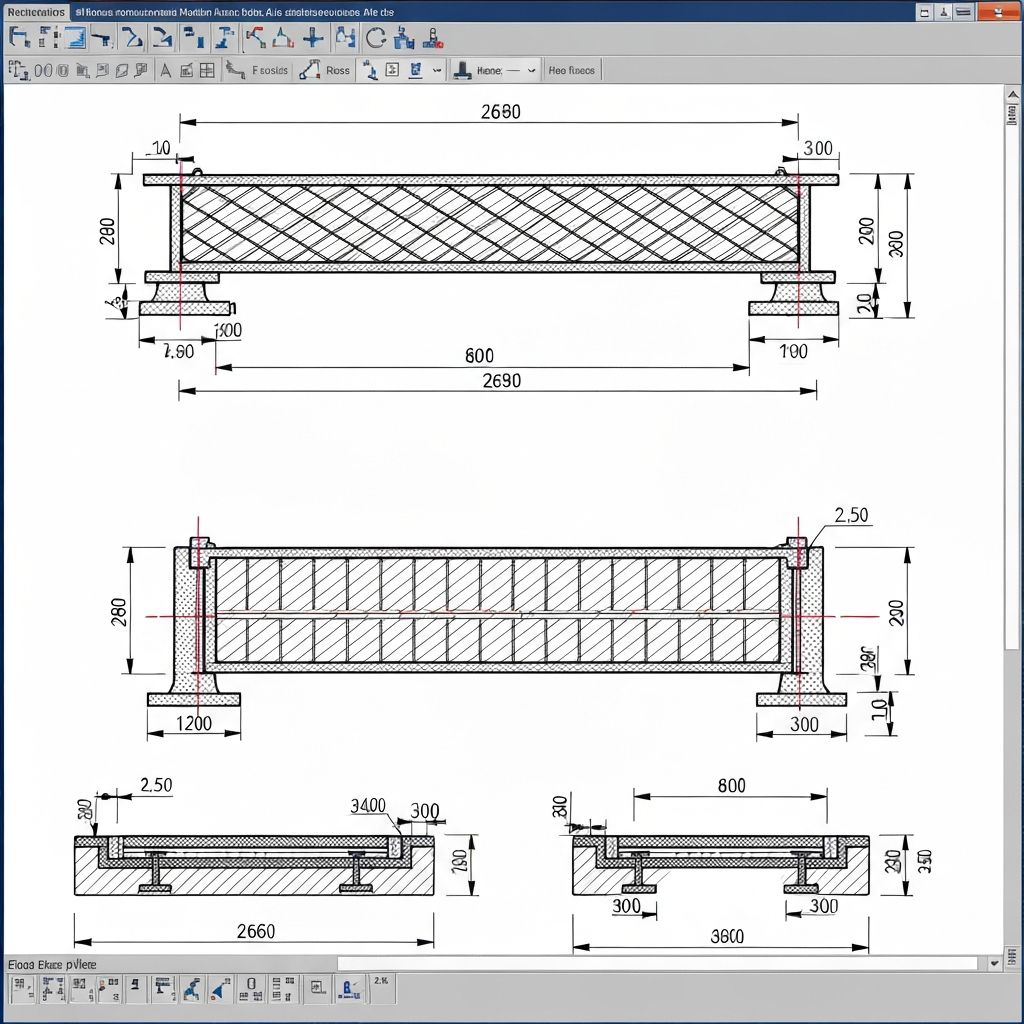
MNL-120-compliant design requires comprehensive documentation. Structural drawings must show all dimensions, reinforcement details, prestressing details (if any), material specifications, and loading conditions. Connection details must be explicitly shown or referenced. Embed location and embed details must be clear. Quality requirements for concrete (strength, air entrainment, w/c ratio, curing) must be specified. Tolerances for dimensions and reinforcement placement must be realistic (matching MNL-116 production capabilities). Inspection and test requirements must be identified. This documentation supports manufacturing quality, field installation success, and long-term performance. Poor documentation creates uncertainty, field improvisation, and quality failures.
Conclusion
MNL-120 design excellence requires integrating structural performance, manufacturing feasibility, installation logistics, and durability into cohesive precast systems. The handbook provides the technical framework; engineering judgment and experience determine whether designs are practical and economical. VSG's consulting expertise spans precast system design, design optimization for manufacturability, connection design, and durability analysis. Whether developing new precast products, optimizing existing designs for cost reduction, or reviewing designs for constructability and performance, our engineering expertise ensures superior results. Contact VSG to discuss precast design challenges, design optimization opportunities, or technical review of precast systems.
Related Testing Services
- Compressive Strength Testing
- Prestress Force Verification
- Connection Load Testing
- Deflection Measurement
- Durability Testing
- Shrinkage and Creep Analysis
Applicable Standards
Professional Engineering Support
This testing and verification work is part of comprehensive construction management and quality assurance services provided by our architectural and engineering consulting team. We support project management, quality control, and commissioning across military, nuclear, infrastructure, and commercial sectors.
Request Engineering Services