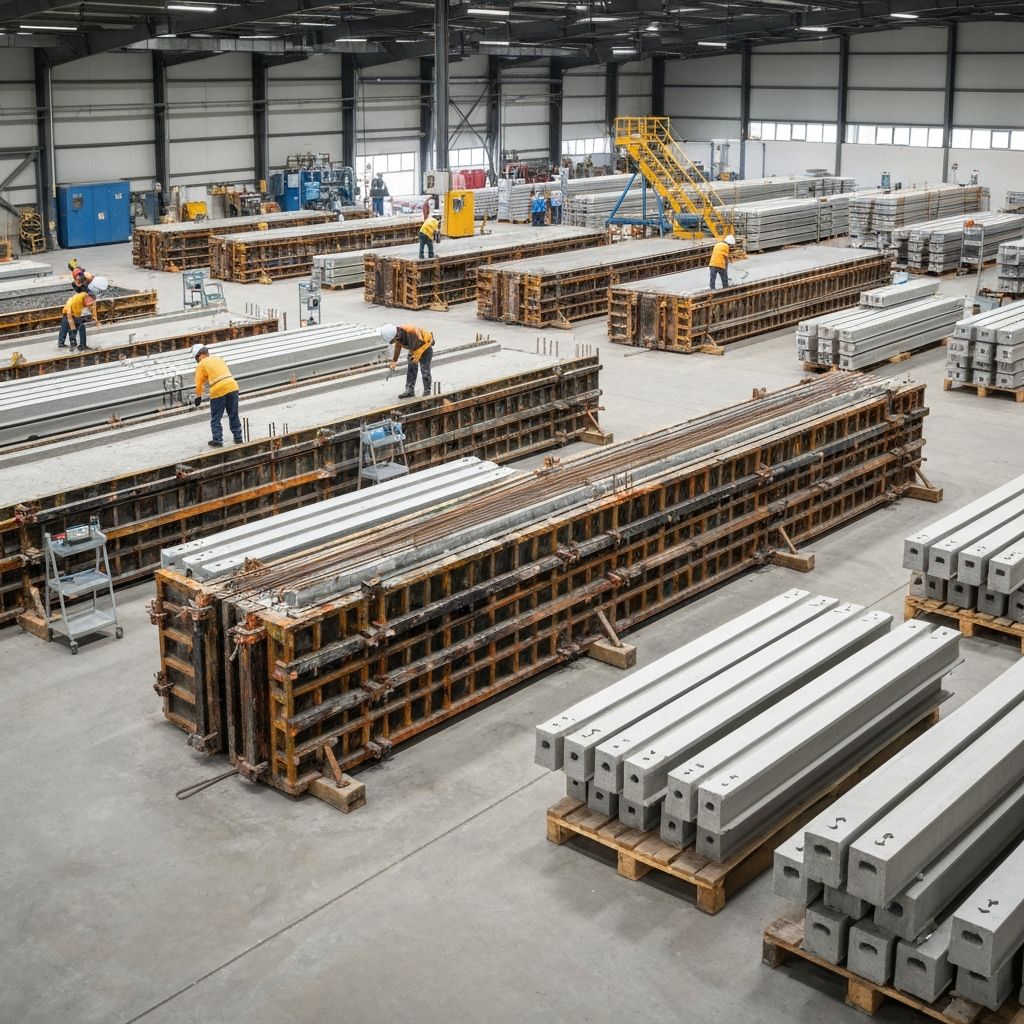
Precast concrete production represents one of the most controlled and quality-intensive construction processes. Unlike cast-in-place concrete, precast elements are manufactured in factory environments where temperature, humidity, formwork accuracy, and material consistency can be precisely managed. The Precast/Prestressed Concrete Institute's MNL-116 'Plant Quality Control Manual for Precast and Prestressed Concrete Products' establishes the industry standard for quality control systems that ensure precast elements meet design specifications and provide superior durability and performance. Proper implementation of PCI MNL-116 protocols separates world-class precast producers from mediocre operations, directly impacting structural safety and long-term asset performance.
The Business Case for PCI MNL-116 Compliance
Precast manufacturing differs fundamentally from cast-in-place work. Elements are produced remotely from job sites, stored before delivery, and installed by others. This means manufacturing defects cannot be easily corrected in the field—quality must be built into every element from the start. PCI MNL-116 provides a structured framework for implementing quality management systems that identify and prevent defects before they reach construction sites. Plants implementing robust QC systems reduce rework, warranty claims, and project delays while building market reputation for reliability. Conversely, plants that cut QC corners face costly field callbacks, potential litigation, and lost business.
Material Control: The Foundation of Quality
Precast production begins with rigorous material control. Cement type, source, and storage conditions directly affect strength development and long-term durability. Aggregates must meet strict specifications—gradation, cleanliness, moisture content, and durability characteristics must be verified regularly through testing. Water quality affects strength and setting times. Admixtures (air entrainment, water reduction, retarders, accelerators) must be calibrated precisely and stored properly. Many precast defects trace back to material inconsistencies that could have been prevented.
- Cement verification: Incoming inspection, storage in sealed conditions, rotation by date of manufacture
- Aggregate testing: Sieve analysis every shift, cleanliness tests, absorption and specific gravity verification
- Water quality: Chloride and sulfate content checks, particularly important for marine and chemically exposed elements
- Admixture control: Calibrated dispensing systems, regular verification testing, monitoring of temperature effects on performance
- Supplementary cementitious materials (SCMs): When used, verify source consistency—fly ash, slag, and silica fume performance varies significantly
Formwork Accuracy and Element Dimensional Control
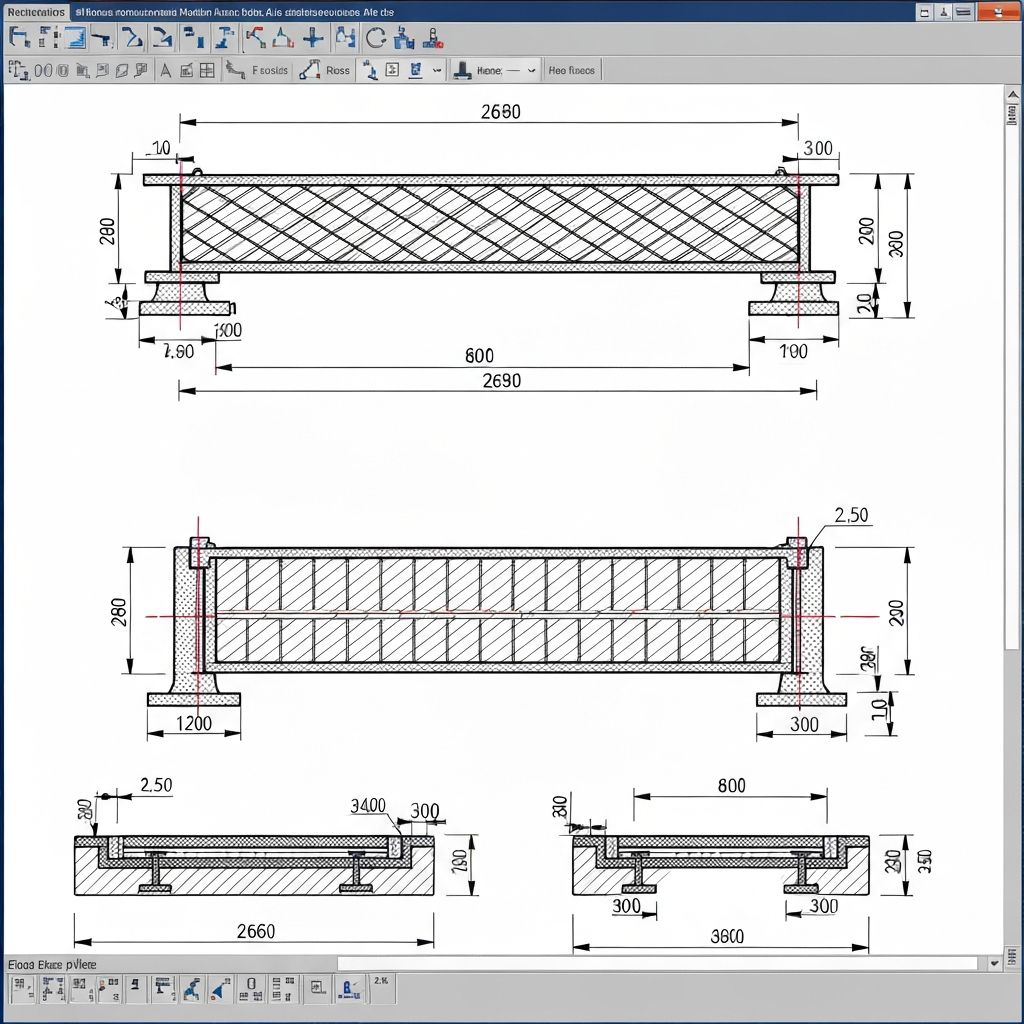
Precast elements are dimensionally precise—formwork must be equally precise. Formwork wear, weld repairs, and casting resin buildup gradually degrade dimensional accuracy. PCI MNL-116 requires formwork accuracy verification at prescribed intervals (typically every 50 elements or monthly, whichever is first). Double tees, hollow-core plank, and double-wall elements are particularly sensitive to width and thickness variations. Dimensional errors cascade downstream—bridge girders that are 1-2mm out of tolerance can create field alignment problems and fitting issues with adjacent elements. Formwork maintenance is not optional; it's essential to consistent production quality.
Concrete Mix Design Verification and Testing
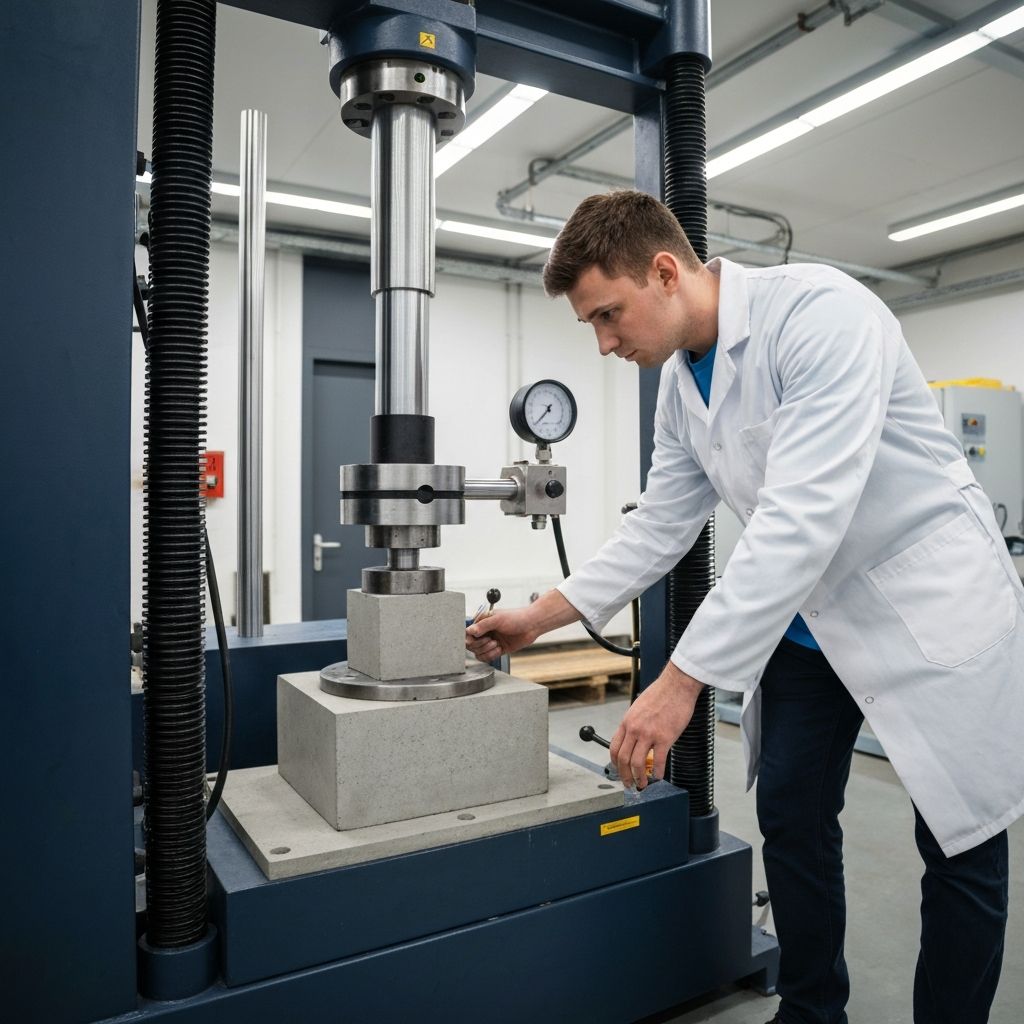
Every precast mix design must be verified at the plant before production begins. Strength tests (compressive strength at 7 and 28 days), slump measurements, air content verification, and other tests are performed on trial batches. These results establish the baseline against which production concrete is measured. During production, each batch or truck of concrete receives quality control testing. Slump must fall within specification range (typically ±25mm). Air content, critical for freeze-thaw durability in northern climates, must meet specification (typically 4-7% ±1.5%). Temperature monitoring ensures concrete is placed at proper temperatures—if concrete arrives too cold, early strength development suffers; if too hot, workability is lost and early-age thermal cracking risk increases.
- Trial batch testing: Determine optimal mix proportions and verify strength potential before production
- Daily batch verification: Slump/flow testing on every batch, air content on every shift minimum
- Cylinder casting: One set (3 cylinders) per truck/day/mix design, tested at 7 and 28 days
- Temperature monitoring: Concrete placement temperature and ambient conditions recorded and evaluated for thermal control strategies
- Strength acceptance: Results must meet ACI 214 statistical acceptance criteria or immediate corrective action is required
The Critical Issue: Early-Age Strength and Stripping Schedules
A major production challenge in precast is determining when elements are strong enough to strip from forms. Strip too early and concrete may not have developed adequate strength—elements may crack or deflect excessively under their own weight. Wait too long and production throughput drops dramatically (each formset becomes unavailable for 48-72 hours instead of 18-24 hours). The solution is calorimetry—embedded maturity sensors and concrete maturity calculations. Elements are not stripped based on arbitrary time (e.g., 'always wait 24 hours') but on actual strength development as measured by temperature history and maturity calculations. This requires embedded thermocouples, continuous data logging, and strength predictions. The payoff is optimized stripping schedules that maintain quality while maximizing throughput.
Reinforcement and Prestressing Tendon Control
Reinforcing steel and prestressing tendons must be positioned accurately and protected from corrosion. Reinforcement cover is critical—insufficient cover exposes reinforcement to carbonation and chloride intrusion, leading to corrosion and spalling years after element production. Tendons in prestressed elements require precise eccentricity (positioning relative to the neutral axis) to develop the design forces. Cover verification is performed using cover meters or depth measurements at specified locations. Tendon stress verification includes load cell monitoring at tensioning and confirmation that initial stresses match design values. Common production defects include inadequate cover, misplaced reinforcement, and tendon slippage.
- Reinforcement placement verification: Cover measurements every 10-15 feet along member length, spacing verification at supports and along spans
- Tendon stress verification: Load cells monitor stressing force; initial stress confirmed to match design force (typically 75% of ultimate tendon strength)
- Strand slippage prevention: Proper seating at anchorages, gradual force application per ACI 318 or similar, monitoring of tendon position during stressing
- De-stressing protocol: Controlled de-stressing after concrete reaches design strength (typically 4,000+ psi in prestressed applications)
- Documentation: All stressing operations recorded with time, force, and anchorage details for traceability
Finishing, Surface Quality, and Defect Mitigation
Surface appearance matters for architectural precast and impacts durability for all precast. Voids (bug holes), discoloration, efflorescence, and form marks reduce aesthetic appeal and can trap moisture. Air entrainment reduces bug holes significantly but is not foolproof. Surface voids 5mm or deeper may require filler repair. Form release agents, vibration quality, and concrete slump all affect surface quality. Some voids are inevitable, but excessive voids indicate poor vibration, improper slump, or air entrainment issues. Spalling risk is minimized by proper air entrainment, adequate cover, and low water-cement ratios.
Critical Production Challenges and Solutions
Precast producers face several recurring challenges that, if not managed properly, compromise quality:
- Thermal control: Large precast elements generate significant hydration heat, creating internal temperature gradients that cause cracking.
- Insufficient air entrainment: Concrete lacks proper air bubbles for freeze-thaw protection in harsh climates.
- Formwork wear: Repeated use creates dimensional inconsistencies affecting element fit-up and performance.
- Inconsistent curing: Temperature swings during curing weaken concrete and affect strength gain rates.
- Inadequate consolidation: Concrete not properly vibrated leaves internal voids and weak sections.
- Tendon seating issues: Prestressing tendons not fully seated create stress concentrations and premature failure.
- Chloride and carbonation: Inadequate cover or improper water-cement ratios allow aggressive environmental attack.
Executive Summary: Common Solutions & Expert Guidance
Each of these challenges has been extensively researched and solved by industry leaders. Thermal control is managed through embedded cooling systems and maturity monitoring. Air entrainment requires calibrated admixture dispensing and rigorous batch testing protocols. Formwork wear is prevented through systematic maintenance schedules and dimensional verification every 50 elements. Curing consistency depends on insulated covers, environmental monitoring, and temperature-controlled enclosures. Consolidation quality requires trained operators, proper vibration duration and frequency, and regular equipment maintenance. Tendon seating relies on gradual stressing protocols per ACI 318 and load cell verification. Chloride and carbonation resistance are achieved through minimum cover verification, low water-cement ratios (<0.40 for exposed conditions), air entrainment, and strategic use of supplementary cementitious materials.
While these solutions are well-established, implementation varies significantly between plants. Our consulting team has audited precast manufacturing facilities across North America, Europe, and Asia, identifying optimization opportunities, developing customized QC protocols, and investigating field failures linked to production issues. Whether you're establishing quality systems for a new facility, optimizing existing processes to reduce defects, or investigating concrete performance problems in service, we can provide the technical expertise and industry best practices to solve your specific challenges. Contact VSG to discuss your precast production quality concerns or schedule a facility audit.
Documentation and Traceability: Building the Quality Record
PCI MNL-116 requires comprehensive documentation. Every batch of concrete, every cylinder test, every formwork inspection, every stressing operation must be recorded. This documentation serves multiple purposes: it demonstrates compliance with design specifications, provides traceability if issues arise, supports warranty claims, and enables root-cause analysis if field problems develop. Modern plants use QMS (Quality Management System) software that tracks all parameters electronically, creating permanent records. This documentation is essential for designer validation, owner audits, and potential legal proceedings.
Conclusion
Precast concrete production excellence is not accidental—it results from systematic quality control implementation, rigorous material verification, and continuous process improvement. PCI MNL-116 provides the roadmap; plant management commitment and operator training execute the system. VSG's consulting experience spans quality system development, production audits, and failure investigation in precast manufacturing facilities worldwide. Whether developing QC protocols for new plants, improving existing systems, or investigating production-related field issues, our engineering expertise supports superior precast quality. Contact us to discuss precast manufacturing quality assurance, process optimization, or field problem investigation.
Related Testing Services
- Compressive Strength Testing
- Air Content Testing
- Slump Testing
- Maturity Testing
- Thermal Monitoring
- Reinforcement Cover Verification
Applicable Standards
Professional Engineering Support
This testing and verification work is part of comprehensive construction management and quality assurance services provided by our architectural and engineering consulting team. We support project management, quality control, and commissioning across military, nuclear, infrastructure, and commercial sectors.
Request Engineering Services