Structural steel construction represents a significant portion of many projects' budgets, yet opportunities for cost optimization frequently go unexploited. Unlike concrete, where cost is largely driven by material and formwork, steel costs involve complex interdependencies between design efficiency, fabrication logistics, connection complexity, and field erection methodology. Optimizing only one aspect—such as reducing member sizes—often increases costs elsewhere through more complex connections, additional bolting, or erection challenges. True cost optimization requires integrated thinking across design, manufacturing, and installation phases. The most cost-effective steel structure is rarely the lightest structure; instead, it balances material efficiency, fabrication complexity, and field logistics into an economically optimized system. PE engineers and project managers who understand these interdependencies can deliver 10-20% cost reductions while maintaining or improving schedules and quality.
Design Phase Optimization: Standardization and Simplification
Steel structure cost effectiveness begins in design. Material costs represent roughly 30-40% of total structural steel cost; fabrication, bolting, and erection represent 60-70%. This means that decisions affecting fabrication complexity often have greater cost impact than reducing member sizes. Standardizing member sizes across the structure dramatically reduces fabrication time—shops can set up cutting and drilling equipment once rather than changing setup for each member size. A structure with 50 different shape/size combinations costs significantly more to fabricate than a structure with 5-10 standard members, even if the latter uses more tonnage.
- Member standardization: Use repeated beam sizes and column sizes throughout the structure to simplify fabrication
- Connection standardization: Design all connections of the same type identically—avoid unique details that require setup changes
- Modular approach: Divide structure into repeated modules (floor bays, building blocks) that use identical connections
- Minimize member types: Use standard wide-flange sections rather than custom shapes or built-up members
- Off-the-shelf connections: Use catalog connections where feasible rather than engineered custom details
Connection Complexity vs. Material Efficiency Trade-Offs
Designers often assume that connecting fewer members with larger sizes reduces cost, but complex connections frequently negate material savings. A rigid moment connection requires multiple bolts, reinforcing plates, and complex geometry—costs that escalate quickly. A pinned connection is simple and fast to fabricate. Reducing one girder depth by 6 inches might save 1-2 tons of material but require reinforcing plates around a 30-bolt moment connection, actual cost savings are minimal or reversed. The optimal design often uses simpler connections even if requiring additional members or material. Fabricators and erectors consistently report that simple, standardized connections save more cost than material reduction through design optimization.
Shop vs. Field Assembly Economics
Work performed in fabrication shops typically costs 40-60% less than equivalent work in the field. Shops have automated equipment (plasma cutting, robotic welding), repetitive processes that build efficiency, and controlled environmental conditions. Field work faces weather exposure, access challenges, union labor premiums, and coordination difficulties. Design decisions that shift work from shop to field typically increase costs despite appearing to simplify the structure. Bolted connections (shop work) cost less than welded field connections, even if bolted designs require additional plates and fasteners. Fully assembled subassemblies delivered to site cost less to erect than partially assembled pieces requiring extensive field assembly, even if complete assembly requires more total work.
Fabrication Strategy and Sequencing
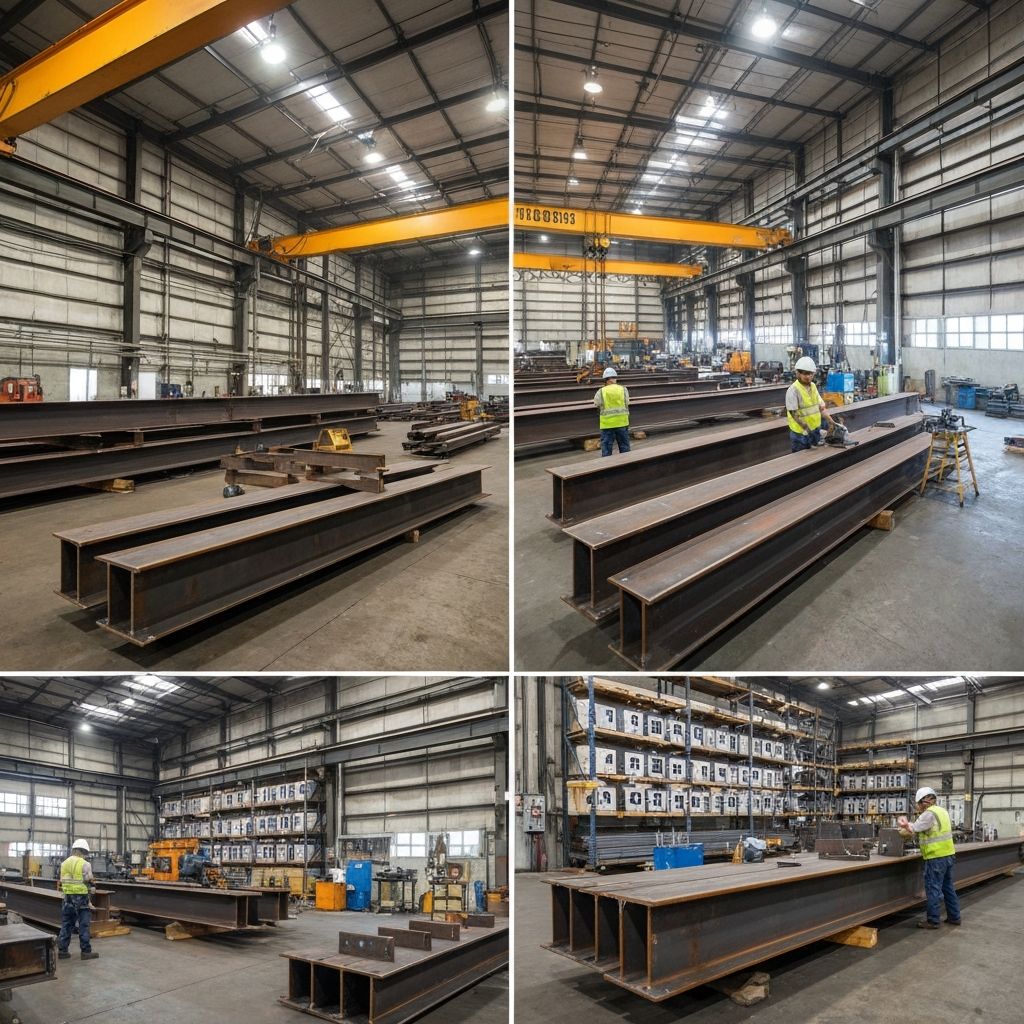
Coordinating design with fabrication capabilities and schedules unlocks significant savings. Fabricators work most efficiently when handling orders with repetitive elements and standardized processes. A structure with three identical floor levels fabricates efficiently; a structure with varying floor plates, different connections, and unique elements creates setups, changeovers, and inefficiencies. Lead times for ordering material, fabrication queuing, and delivery scheduling significantly impact project cost and schedule. Early coordination with fabricators regarding capacity, typical sequence, and preferred sizes/shapes allows designers to optimize for real-world fabrication rather than theoretical elegance. Some projects worth 5-15% savings by working with fabricators during design to align the design with their shop capabilities and production planning.
- Early fabricator engagement: Involve fabricator in design phase to identify production efficiencies
- Material ordering coordination: Consolidate member sizes to reduce material types and lead times
- Fabrication sequence planning: Design sequence that matches fabricator's workflow and capacity
- Quality and tolerance: Specify appropriate tolerances matching fabrication capabilities—over-tight tolerance increases cost
- Delivery logistics: Coordinate member sizes and assemblies with transport and site storage capabilities
Erection Sequencing and Installation Logistics
Field erection represents 35-50% of structural steel cost. Installation logistics significantly impact this component. Designing structures that can be erected efficiently—with lifting points, lateral bracing methods, and sequence that minimizes crane time—reduces erection costs substantially. Large, heavy members may represent material efficiency but require larger cranes, longer rigging preparation, and more complex temporary bracing. Designing for smaller, lighter members that erect quickly often reduces total erection cost despite using more total tonnage. Temporary bracing strategy is critical—internal temporary bracing (temporary members that remain until connections are complete) is faster than external bracing but adds weight and complexity. Temporary connections that allow rapid assembly of work sections before bolting final connections reduce crane time.
High-Strength Steel and Material Grade Optimization
Using higher-strength steel (ASTM A588 Grade 50 or 60 versus Grade 36) reduces member weight and material quantity, but at higher material cost. Optimization requires life-cycle thinking. For long-span applications (bridges, long-span industrial buildings), weight reduction justifies higher steel grade. For short-span applications (multi-story buildings with modest spans), lower grades with larger members often provide better economics despite greater tonnage. Fatigue-critical applications may require higher grades for stress relief. Corrosion-resistant grades (weathering steel, stainless) have dramatically higher costs and are justified only for specific exposure conditions. Material optimization requires careful cost analysis comparing material cost differential against weight-related impacts (fabrication, handling, erection).
Bolted vs. Welded Connection Economics
The choice between bolted and welded connections has profound cost implications. Welded connections are strong and elegant but require skilled welders, inspection, and field control. Bolted connections use standardized hardware and faster assembly but may require additional plates to develop capacity. For field connections in multi-story buildings, bolted connections typically cost less despite requiring more material. For shop connections where welding automation is available, welding is often more economical. Hybrid approaches (bolted with shop welds) often optimize cost by using automation where effective and bolting where it reduces time and complexity. Cost analysis must account for inspection/quality costs, schedule impact of weather delays (bolting works in wet conditions; welding does not), and total assembly time.
Practical Cost Optimization Case Studies
Real-world examples illustrate optimization principles. A design reducing girder depth by 12 inches (to reduce building envelope cost) increased connection complexity, requiring moment-connection design. Additional reinforcement, bolting, and fabrication added $150/ton to fabrication cost, exceeding envelope savings. Reverting to simpler connections with standard depth reduced overall cost. Another project considered ASTM A588 Grade 50 steel to reduce weight and deflection. Analysis showed total cost (material plus fabrication and erection) was actually lower with Grade 36 and slightly larger members. A third project optimized for 90% of members being identical, using only three distinct column sizes and two beam sizes across 30 floors, reducing fabrication setup changes and errors significantly. These examples demonstrate that lowest-tonnage design is not lowest-cost design.
Specification and Quality for Cost Efficiency
Specifications have enormous cost impact. Over-specified material (ASTM Grade 70 versus Grade 50), surface finish (full shop paint versus field paint), tolerance (±1/4 inch versus ±3/8 inch), and inspection requirements (100% inspection versus statistical sampling) escalate costs without improving performance. Conversely, under-specification creates field issues, rework, and delays. Optimal specifications balance actual performance requirements against cost. Standard specifications (AISC 360 for design, ANSI/AISC 70 for fabrication) provide appropriate baselines; deviations require justification. Working with fabricators and erectors during specification development ensures that requirements are achievable and cost-effective. Specifications should address tolerance, surface finish, and bolting with realistic but appropriate expectations.
Conclusion
Structural steel cost optimization requires integrated thinking across design, fabrication, and erection phases rather than isolated optimization of any single component. The most cost-effective structures emphasize standardization, simplification, and shop efficiency rather than minimum tonnage. VSG's structural engineering expertise spans design optimization, fabrication coordination, and installation strategy to deliver integrated solutions that reduce costs while maintaining schedule and quality. Whether developing cost-optimized designs, coordinating with fabricators for manufacturability, or planning efficient erection sequences, our engineers deliver practical solutions grounded in real-world fabrication and field experience. Contact VSG to discuss structural steel cost optimization for your project.
Related Testing Services
- Weld Quality Inspection
- Bolt Tension Verification
- Member Deflection Measurement
- Connection Load Testing
- Material Grade Verification
Applicable Standards
Professional Engineering Support
This testing and verification work is part of comprehensive construction management and quality assurance services provided by our architectural and engineering consulting team. We support project management, quality control, and commissioning across military, nuclear, infrastructure, and commercial sectors.
Request Engineering Services