ASTM C94/C94M—Standard Specification for Ready-Mixed Concrete—is the internationally recognized standard governing the manufacturing, delivery, and quality control of ready-mixed concrete in North America and globally. Originally adopted in 1933 and continuously updated, ASTM C94 establishes mandatory requirements for concrete producers, transportation, mixing procedures, and acceptance testing that ensure consistent quality and performance for all construction applications. This specification addresses the complete lifecycle of ready-mixed concrete from the concrete plant through delivery to the jobsite, establishing detailed requirements for materials, batching accuracy, mixing time, slump control, air-entrained concrete specifications, temperature management, and comprehensive testing protocols. Understanding ASTM C94 requirements is essential for engineers, contractors, concrete producers, and quality control personnel to maintain compliance and verify that delivered concrete meets specification requirements.
Scope and Applicability of ASTM C94
ASTM C94/C94M covers ready-mixed concrete as defined in the standard—concrete manufactured and delivered to a purchaser in a fresh state. The specification establishes requirements for the quality of concrete and permits three distinct procurement options (Options A, B, and C) through which purchasers and manufacturers establish the proportioning basis for concrete mixtures. Option A places full responsibility for mixture proportioning on the manufacturer, who must verify that proposed materials and proportions will produce concrete meeting the purchaser's specified compressive strength requirements. Option B places responsibility for proportioning on the purchaser, who specifies cement content, maximum water content, and admixture requirements. Option C represents a middle approach where the manufacturer selects proportions to meet specified strength while adhering to a minimum specified cement content. The standard explicitly does not cover placement, consolidation, curing, or protection of concrete after delivery to the purchaser—these aspects are addressed in other standards such as ACI 301 and ACI 318. ASTM C94 has been approved for use by agencies of the U.S. Department of Defense and is the standard specification for virtually all military construction projects.
Materials Specification and Cementitious Components
ASTM C94 specifies that all constituent materials of ready-mixed concrete shall conform to applicable ASTM standards or specifications designated by the purchaser. Hydraulic cement must conform to ASTM C150 (Portland Cement), ASTM C595 (Blended Hydraulic Cements), or ASTM C1157 (Performance Specification for Hydraulic Cement). When supplementary cementitious materials are used, coal fly ash and natural pozzolans must conform to ASTM C618, slag cement must conform to ASTM C989, and silica fume must conform to ASTM C1240. Normal-weight aggregates must conform to ASTM C33, lightweight aggregates to ASTM C330, and heavyweight aggregates to ASTM C637. Air-entraining admixtures must conform to ASTM C260, while chemical admixtures must conform to either ASTM C494 (standard chemical admixtures) or ASTM C1017 (admixtures for flowing concrete). Mixing water must conform to ASTM C1602, which establishes stringent requirements for water quality including limits on chlorides, sulfates, and organic impurities. The specification permits interchanging of materials and grades, but notes that such interchanging may produce concrete of different properties—a critical consideration for contract compliance and performance assurance.
Ordering Information and Procurement Options
ASTM C94 requires that purchasers specify critical parameters before ordering concrete. The purchaser must designate coarse aggregate size(s), slump or slump flow at the point of delivery with applicable tolerances, and when air-entrained concrete is specified, the required total air content. For lightweight concrete, the purchaser must specify equilibrium density. The purchaser must also select whether concrete proportioning will follow Option A (manufacturer responsibility for proportioning), Option B (purchaser-specified cement and water content), or Option C (manufacturer proportioning with minimum cement content constraint). When ordering, the purchaser should specify any drum revolution limit dictating when concrete discharge must begin. Failure to specify these parameters creates ambiguity in acceptance criteria. The purchaser should also state any optional requirements from ASTM C1602 regarding water quality, specify exposure conditions to inform air content requirements, and identify any special environmental considerations (hot weather, cold weather concreting). These ordering specifications form the contractual basis for concrete acceptance—any deviations between specified requirements and delivered concrete constitute grounds for rejection.
Batching Plant Requirements and Scale Accuracy
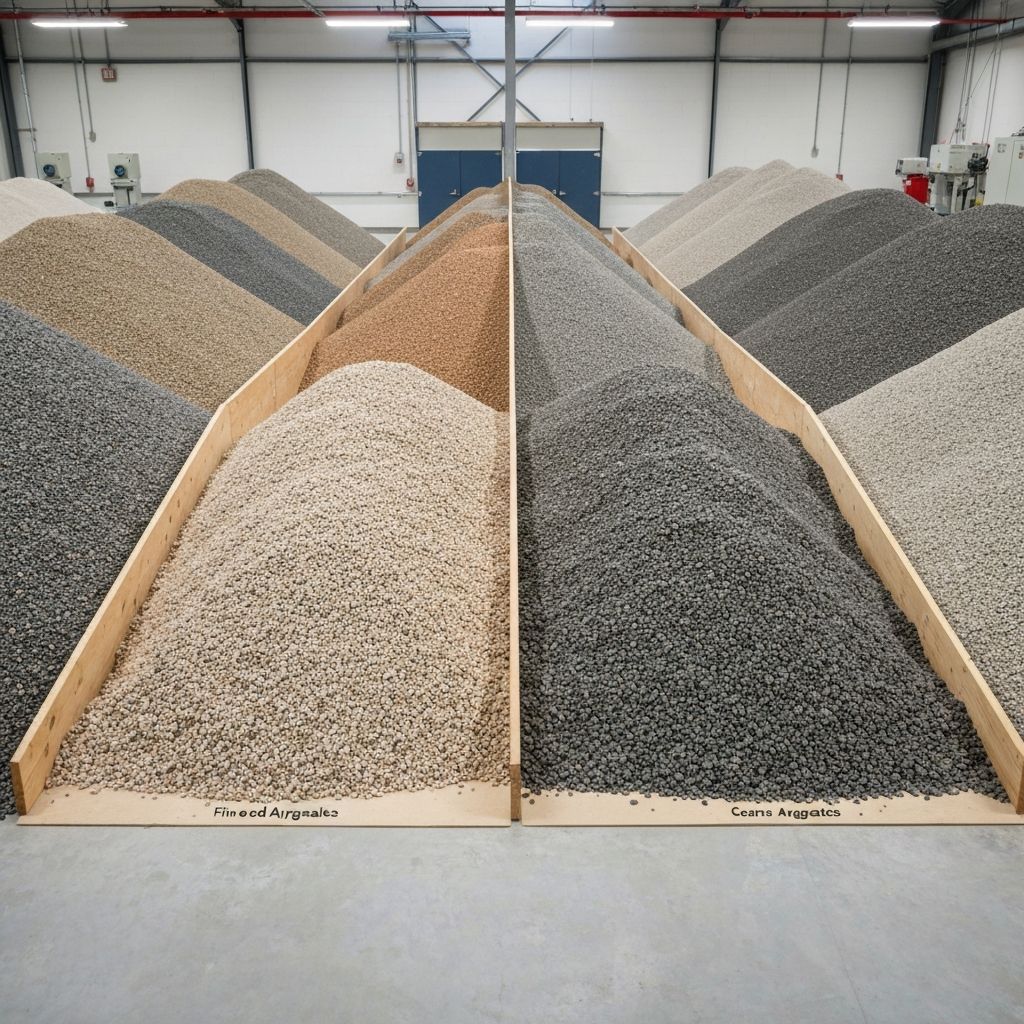
ASTM C94 establishes rigorous requirements for batch plant infrastructure and measurement accuracy. The batching plant must include bins with adequate separate compartments for fine and each required coarse aggregate size, with each compartment designed to discharge efficiently and freely with minimum segregation. Weighing hoppers must be constructed to eliminate tare material accumulations and discharge fully. Scales used to measure materials must be verified in accordance with specific accuracy requirements: accuracy verified through normally used capacity must be within ±0.15% of total capacity or 0.4% of the applied net load, whichever is greater. Field standard weights used in scale verification must comply with NIST Handbook 105-1 requirements. Cementitious materials are measured by mass on a separate scale distinct from other material scales, with hydraulic cement measured separately from supplementary cementitious materials. When cementitious material exceeds 30% of full scale capacity, the measured quantity of hydraulic cement must be within ±1% of required mass, with cumulative hydraulic cement plus supplementary materials within ±1% at each intermediate weighing. For smaller batches (minimum 1 yd³), measured quantities must be not less than required nor more than 4% in excess. Aggregate must be measured by mass based on dry materials plus total moisture (absorbed plus surface). Water measurement devices must be capable of delivering required quantities within 1% accuracy and must not be affected by variable water supply line pressures.
Central-Mixed, Shrink-Mixed, and Truck-Mixed Concrete
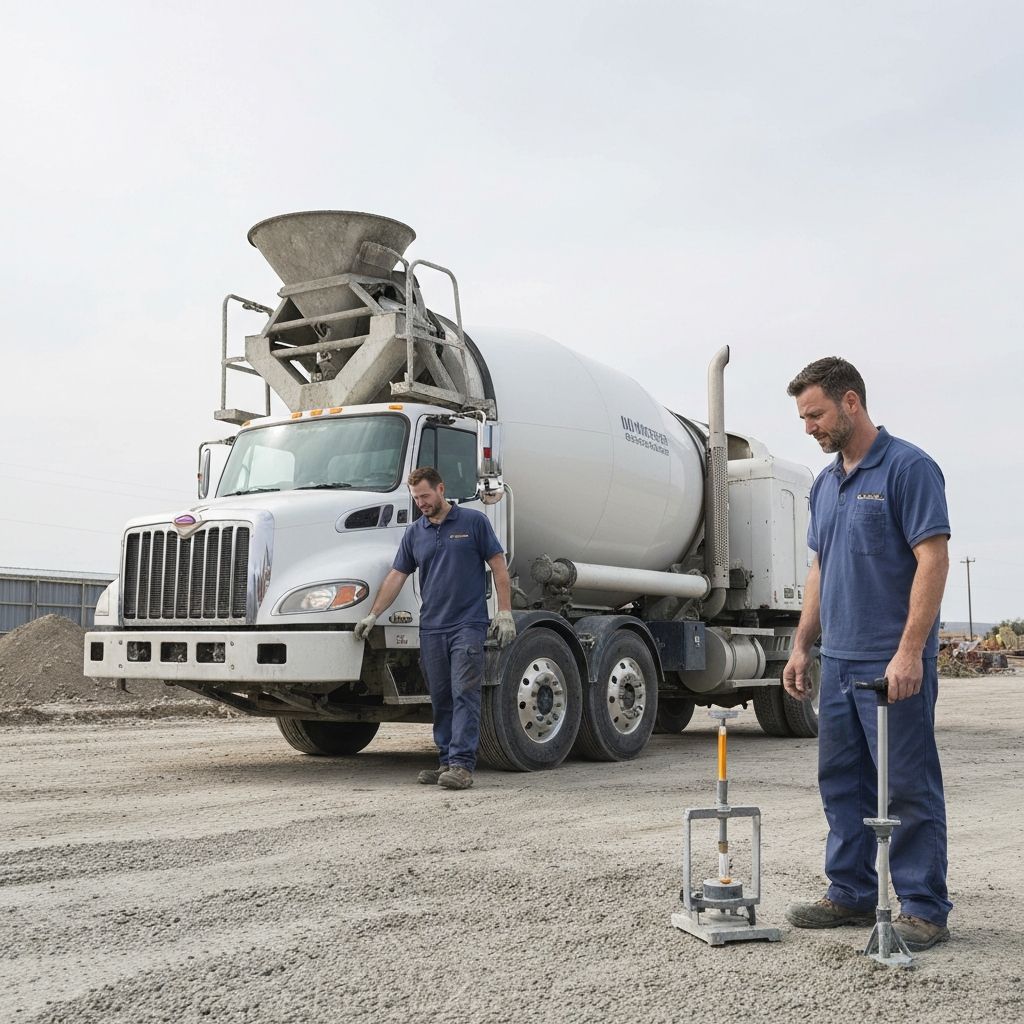
ASTM C94 permits three distinct methods of mixing ready-mixed concrete, each with specific requirements and uniformity criteria. Central-mixed (plant-mixed) concrete is completely mixed in a stationary mixer and transported to the jobsite in a truck mixer operating at agitating speed or in non-agitating equipment. Mixing time for central-mixed concrete must be minimum required to intermingle ingredients (typically 1 minute for mixers ≤1 yd³, plus 15 seconds for each additional yd³), with mixer performance tests permitted to reduce mixing time provided final concrete meets uniformity requirements specified in Annex A1. Shrink-mixed concrete is partially mixed in a stationary mixer (minimum time necessary to intermingle ingredients) with mixing completed in a truck mixer, followed by additional mixing at agitating speed as needed for uniformity compliance. Truck-mixed concrete is completely mixed in a truck mixer using 70-100 revolutions at manufacturer-designated mixing speed to achieve uniformity meeting Annex A1 requirements. If uniformity standards are not met with 100 revolutions of mixing, the mixer shall not be used unless conditions are corrected (improved charging sequence, smaller load, longer mixing time, or other modifications). Concrete uniformity testing requires samples taken from approximately 15% and 85% discharge points, obtained within 15 minutes, with slump difference requirements specified in Annex A1. Mixers and agitators must display metal plates plainly marking gross volume of drum, capacity in terms of mixed concrete, and minimum/maximum mixing speeds.
Slump and Slump Flow Control with Tolerances
ASTM C94 establishes precise tolerances for slump and slump flow, differentiated based on how requirements are specified. When slump is stated as maximum or not-to-exceed, the tolerance is +0 and -1½ inches (40 mm) for slumps ≤3 inches, or +0 and -2½ inches (40 mm) for slumps >3 inches. When specified as target or nominal slump, tolerances are ±½ inch (15 mm) for slumps ≤2 inches, ±1 inch (25 mm) for slumps 2-4 inches, or ±1½ inches (40 mm) for slumps >4 inches. For self-consolidating concrete with slump flow specification, tolerances are ±1½ inches (40 mm) for flows ≤22 inches or ±2½ inches (65 mm) for flows >22 inches. Concrete must be available within permissible slump/slump flow range for 30 minutes starting from arrival at the jobsite or after initial slump adjustment, whichever is later, with first and last ¼ yd³ exempt from this requirement. When truck mixer discharge begins at the jobsite and concrete slump or slump flow is less than specified, a one-time water addition is permitted to achieve desired slump within specified tolerances and within maximum water content limits—all water additions must be completed within 15 minutes and followed by 30 additional revolutions at mixing speed. Water shall not be added at any time after this initial correction.
Air-Entrained Concrete and Air Content Specifications
When air-entrained concrete is specified, ASTM C94 requires the purchaser to specify total air content of concrete sampled at discharge from the transportation unit. Table 1 of the standard provides recommended total air contents differentiated by exposure condition (mild, moderate, severe) and nominal aggregate size. For mild exposure conditions (minimal freeze-thaw cycling), recommended air contents range from 1.5% to 4.5% depending on aggregate size. For moderate exposure (freezing conditions with occasional deicing salts or moisture), recommended air contents range from 3.5% to 6.0%. For severe exposure (frequent freeze-thaw cycling with deicing chemicals), recommended air contents range from 4.5% to 7.5%. Air content must be measured using ASTM C138 (gravimetric method), ASTM C173 (volumetric method), or ASTM C231 (pressure method). When measured air content falls below specified levels by more than the allowable tolerance of ±1.5%, the manufacturer may add air-entraining admixture followed by minimum 30 revolutions at mixing speed, provided drum revolution limits are not exceeded. If measured air content exceeds specifications by more than tolerance, a check test is immediately performed; if the check test fails, concrete fails specification requirements.
Temperature Control and Concrete Delivery Requirements
ASTM C94 establishes minimum temperature requirements for concrete delivered during cold weather, differentiated by section size. For sections <12 inches, minimum concrete temperature is 55°F (13°C). For sections 12-36 inches, minimum is 50°F (10°C). For sections 36-72 inches, minimum is 45°F (7°C). For sections >72 inches, minimum is 40°F (5°C). Maximum temperature of concrete produced with heated aggregates, heated water, or both shall at no time exceed 90°F (32°C). During hot weather concreting, the producer shall deliver concrete at the lowest temperature practicable subject to purchaser approval. Water shall not be added to the batch at any time after the initial permitted slump adjustment except as specifically authorized. The concrete shall be discharged within 1½ hours after introduction of mixing water to cement and aggregates (or introduction of cement to aggregates), except when concrete slump after this time is such that placement is feasible without water addition—in this case the purchaser may waive the time limitation. In hot weather or under conditions contributing to rapid stiffening, the purchaser may specify a time less than 1½ hours.
Delivery Tickets and Documentation Requirements
ASTM C94 requires that the concrete manufacturer furnish a delivery ticket with each batch before unloading, printed, stamped, or written with specific information. Mandatory delivery ticket information includes: name of ready-mix company and batch plant or batch plant number; serial ticket number; date; truck number; purchaser name; specific job designation (name and location); specific class or designation of concrete per job specifications; amount of concrete in cubic yards or cubic meters; time loaded or of first mixing; amount of water added by the purchaser or representative with initials; total water added by automated measurement and slump monitoring equipment (if applicable); and revolution limit determined by manufacturer. Upon purchaser request, the manufacturer shall also provide: readings of revolution counter at first water addition; type, brand, and amount of cement; type, brand, and amount of supplementary cementitious materials (fly ash, pozzolan, slag cement, silica fume); type, brand, and amount of admixtures; source and amount of each water addition; information necessary to calculate total mixing water; maximum aggregate size; mass of fine and coarse aggregate; certification that ingredients were previously approved; and signature or initials of producer's representative. This documentation forms the record of concrete composition and is essential for acceptance testing, troubleshooting performance issues, and regulatory compliance.
Compressive Strength Testing and Acceptance Criteria
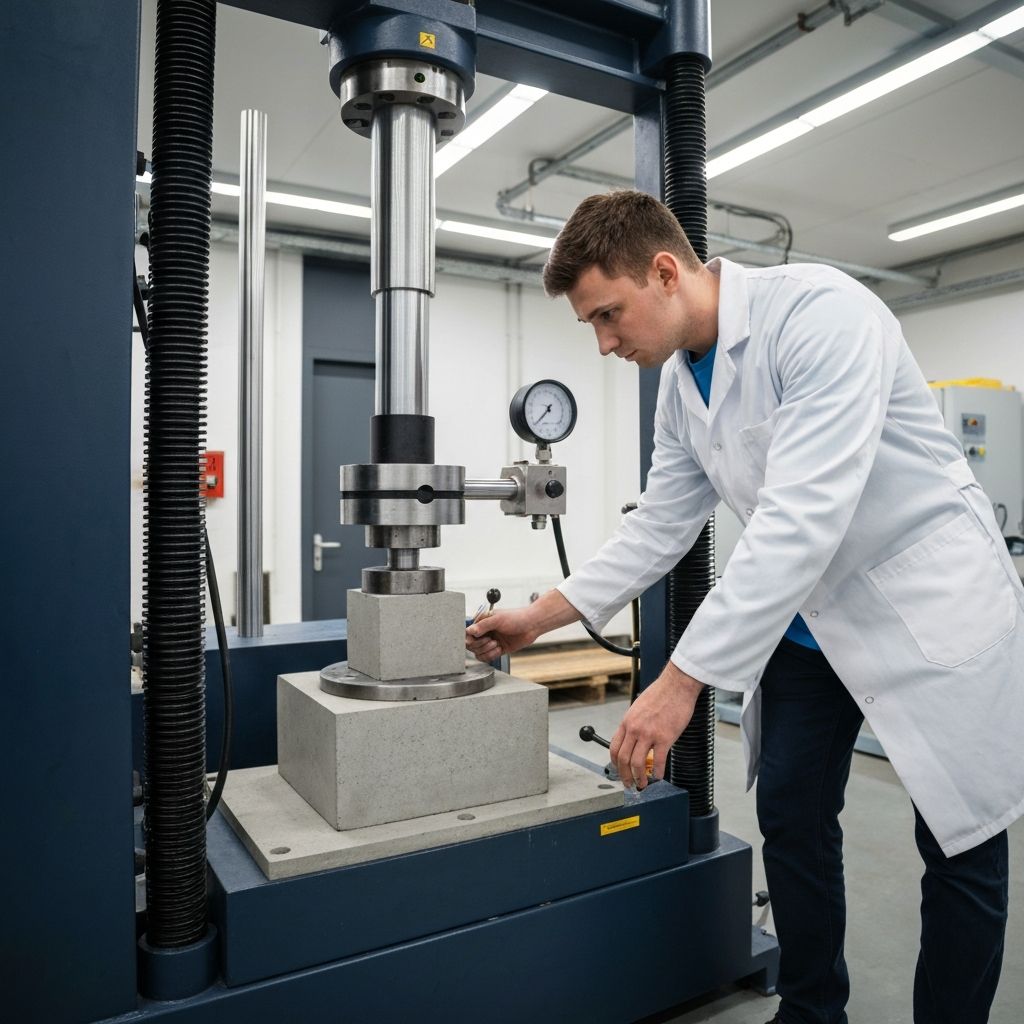
ASTM C94 establishes specific requirements for strength testing and acceptance of ready-mixed concrete. When strength is the basis for acceptance, standard test specimens must be made in accordance with ASTM C31 (Practice for Making and Curing Concrete Test Specimens in the Field) using standard moist curing conditions. The technician performing strength tests must be certified as an ACI Concrete Strength Testing Technician (Grade I) or ACI Concrete Laboratory Testing Technician (Grade II) or equivalent. At least two standard test specimens must be molded from a composite sample, with test result calculated as the average strength of specimens tested at specified age (typically 28 days unless otherwise specified). If one specimen shows evidence of improper sampling, molding, handling, curing, or testing (other than low strength), that specimen shall be discarded and the remaining cylinder result is the test result. Concrete conforms to strength requirements when: (1) the average of any three consecutive strength tests equals or exceeds specified strength f'c, and (2) no individual strength test falls more than 500 psi (3.5 MPa) below specified strength when f'c ≤5000 psi, or less than 0.90f'c when f'c >5000 psi. If concrete fails to meet strength requirements, the manufacturer and purchaser must confer to determine appropriate adjustments to mixture proportions, production process, or testing procedures.
Sampling, Testing Frequency, and Quality Control
ASTM C94 specifies minimum sampling and testing frequencies to ensure representative quality control. Samples must be obtained in accordance with ASTM C172 (Practice for Sampling Freshly Mixed Concrete), except when taken to determine within-batch uniformity. Tests for slump/slump flow, air content, density, and temperature must be made at time of discharge at inspector discretion and always when strength specimens are made. Minimum testing frequency is not less than one test for each 150 yd³ (115 m³) of concrete delivered, with each test from a separate batch. On each day concrete is delivered, at least one strength test shall be made for each concrete class. When preliminary checks show slump, slump flow, or air content outside specified limits, a full check test is performed immediately on new samples. If the preliminary measurement is greater than upper limit, check test failure means concrete fails specification. If preliminary measurement is less than lower limit, adjustments are permitted per Sections 12.7 or 8.3, followed by new sampling; if adjusted concrete fails check test, concrete is rejected. The testing agency performing acceptance tests must meet requirements of ASTM C1077 (Practice for Agencies Testing Concrete and Concrete Aggregates).
Concrete Uniformity Requirements and Testing
ASTM C94 Annex A1 establishes concrete uniformity requirements ensuring that batches are thoroughly mixed and uniform. Uniformity is evaluated by comparing test results from samples taken from approximately 15% and 85% discharge points of each batch. The maximum permissible difference between results on these two locations must not exceed specified limits. Uniformity requirements include: mass per unit volume (air-free basis) of maximum 1.0 lb/ft³ (16 kg/m³) difference; air content of maximum 1.0% difference; slump difference of 1.0 inch (25 mm) maximum when average slump ≤4 inches, or 1.5 inches (40 mm) when average slump 4-6 inches; coarse aggregate content (retained on No. 4 sieve) maximum 6.0% difference by mass; air-free mortar mass per unit volume maximum 1.6% difference; and 7-day compressive strength maximum 7.5% difference. When tested concrete conforms to limits on at least five of six tests, concrete is considered uniform. Mixer or agitator performance shall be confirmed through uniformity testing whenever appearance or aggregate content of samples indicates inadequate mixing. Accumulated hardened concrete or mortar buildup on mixer blades requires periodic examination and performance testing if buildup becomes extensive enough to affect mixer performance.
Materials Measurement Accuracy and Quality Assurance
ASTM C94 establishes precise measurement accuracy requirements for all concrete constituents. Cementitious materials are measured by mass with hydraulic cement on a separate scale from supplementary cementitious materials. When cumulative cementitious material exceeds 30% of scale capacity, hydraulic cement measurement must be within ±1% and cumulative cement plus supplementary materials within ±1% at each intermediate weighing. For batches less than 30% of scale capacity, quantities must not be less than required nor more than 4% in excess. Aggregates are measured by mass based on dry material plus all surface and absorbed moisture. Aggregate measurements must be within ±0.3% of scale capacity or ±3% of required mass, whichever is less (for quantities <30% capacity), or ±1-2% of required mass for larger quantities depending on scale configuration. Mixing water includes water added to batch, ice added to batch, surface moisture on aggregates, water in admixtures, and wash water retained in truck mixer drums. Added water and ice must be measured to 1% accuracy, with total water ±3% of specified amount. Chemical admixtures in powder form are measured by mass; liquid admixtures by mass or volume. Admixture batching must be accurate to ±3% of required amount or ±the dosage for 100 lb (50 kg) cement, whichever is greater.
Plant Inspection and Manufacturer Responsibilities
ASTM C94 requires that concrete manufacturers afford inspectors reasonable access without charge to production facilities for verification that concrete is being produced in accordance with specification requirements. All tests and inspections shall be conducted without unnecessarily interfering with concrete manufacturing and delivery operations. The contractor must similarly afford inspectors reasonable access and assistance for procurement of fresh concrete samples at placement for conformance verification. The manufacturer shall furnish to the purchaser copies of all test reports performed on concrete samples used to determine specification compliance on a timely basis—these reports form critical documentation for quality records and contractual verification. The manufacturer must provide delivery tickets with each batch before unloading and must maintain certified copies of all concrete mixture proportions as established through Options A, B, or C at the batch plant. Upon purchaser request prior to delivery, the manufacturer must furnish statement giving dry masses of cement, saturated-surface-dry masses of aggregate, types and names of admixtures, and quantities of water that will be used for each concrete class, along with evidence that materials and proportions will produce concrete of required quality.
Conclusion
ASTM C94/C94M represents decades of industry experience and technical consensus on ready-mixed concrete quality control. Successful projects depend on comprehensive understanding of specification requirements, rigorous batch plant compliance, proper testing protocols, and effective communication between all parties. VSG provides concrete quality oversight, ASTM C94 compliance verification, and construction testing support to ensure your projects meet specification standards and structural performance requirements. Contact us to strengthen your concrete quality assurance and construction verification programs.
Related Testing Services
- Compressive Strength Testing
- Slump Testing
- Air Content Determination
- Temperature Measurement
- Concrete Density Testing
- Aggregate Gradation
- Cement Content Verification
Applicable Standards
Professional Engineering Support
This testing and verification work is part of comprehensive construction management and quality assurance services provided by our architectural and engineering consulting team. We support project management, quality control, and commissioning across military, nuclear, infrastructure, and commercial sectors.
Request Engineering Services