ASTM C33/C33M—Standard Specification for Concrete Aggregates—establishes the fundamental quality requirements and grading specifications for fine and coarse aggregates used in normal-weight concrete construction. Originally adopted in 1921 and continuously refined based on field performance and research, ASTM C33/C33M-13 represents the consensus of materials engineers, contractors, and researchers on aggregate quality criteria essential for durable, long-lasting concrete structures. This specification covers aggregate sourcing, classification, grading limits, deleterious substance restrictions, soundness requirements, organic impurity evaluation, and alkali-reactivity assessment. Aggregates typically comprise 60-75% of concrete volume by mass, making their quality directly proportional to concrete performance, durability, workability, and long-term structural integrity. Proper selection and verification of aggregates conforming to ASTM C33 requirements is foundational to producing concrete that meets design specifications and performs satisfactorily throughout its intended service life in varying exposure conditions.
Scope, Applicability, and Aggregate Classification
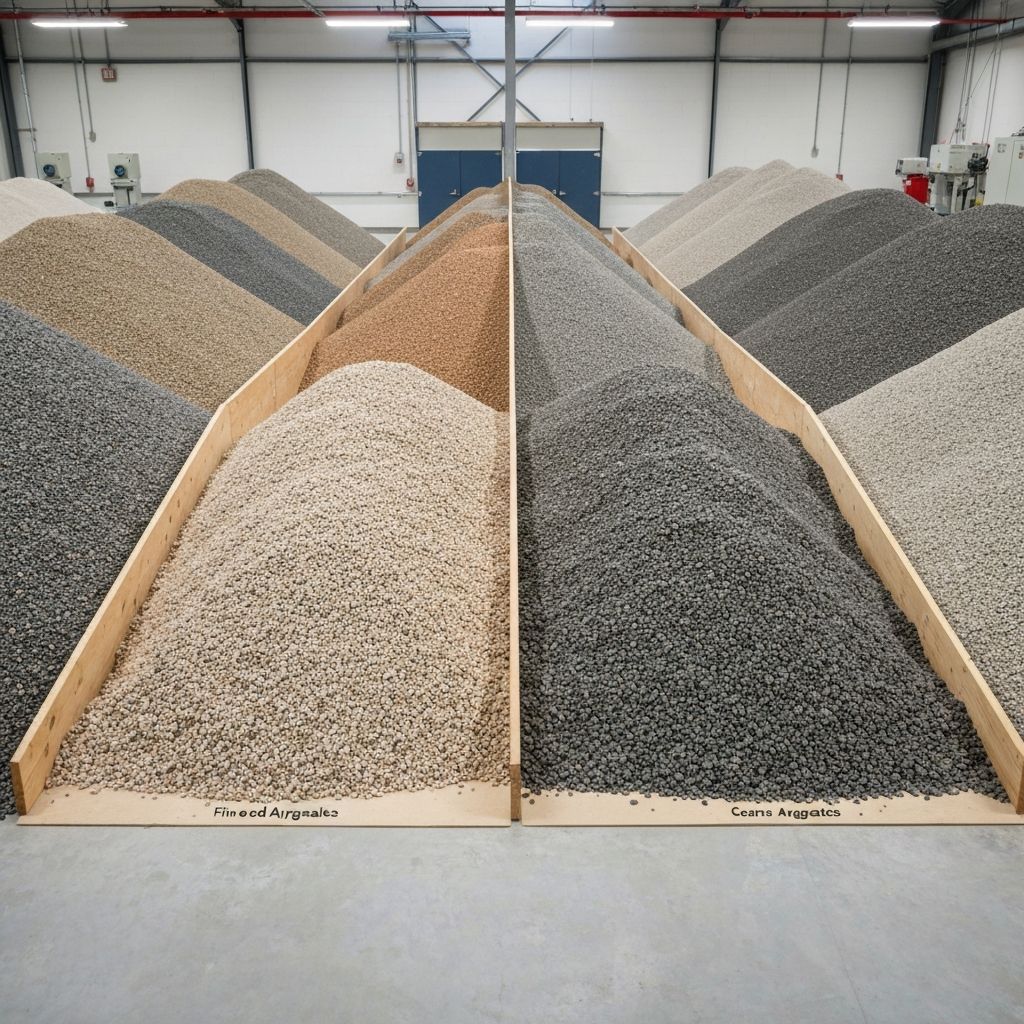
ASTM C33/C33M defines requirements for grading and quality of fine and coarse aggregates for use in normal-weight concrete. The specification explicitly excludes lightweight and heavyweight aggregates, which are covered by separate standards (ASTM C330, C331, C332 for lightweight; ASTM C637 for heavyweight). Fine aggregate is defined as material passing the 9.5-mm (3/8-inch) sieve, consisting of natural sand, manufactured sand, or combinations thereof. Coarse aggregate consists of gravel, crushed gravel, crushed stone, air-cooled blast furnace slag, or crushed hydraulic-cement concrete, or combinations thereof. The specification is designed for use in contract documents, purchase orders, and project specifications to define aggregate quality, ensure material availability in construction areas, and establish a consistent basis for acceptance testing. The specification recognizes that certain regions may have local aggregate sources with characteristics either more or less restrictive than these requirements. Specifiers must verify that required aggregate gradings and quality levels are available from local sources; otherwise, alternative materials, blending strategies, or special considerations may be necessary.
Fine Aggregate Grading Requirements and Fineness Modulus
Fine aggregate shall be graded within specified limits established in Table 1 of ASTM C33, with percentage passing requirements for each sieve size. For material passing the 9.5-mm sieve, 100% is required; 95-100% passing the 4.75-mm (No. 4) sieve; 80-100% passing the 2.36-mm (No. 8) sieve; 50-85% passing the 1.18-mm (No. 16) sieve; 25-60% passing the 600-μm (No. 30) sieve; 5-30% passing the 300-μm (No. 50) sieve; 0-10% passing the 150-μm (No. 100) sieve; and 0-3.0% passing the 75-μm (No. 200) sieve. The fineness modulus—calculated as the sum of cumulative percentages retained on standard sieves divided by 100—provides a single numerical index of aggregate fineness. ASTM C33 requires fineness modulus between 2.3 and 3.1 for acceptable concrete properties. Additionally, no more than 45% passing any sieve may be retained on the next consecutive sieve, ensuring proper gradation continuity. For concrete not subject to abrasion, the material finer than the 75-μm sieve limit may increase to 5.0%, and for manufactured fine aggregate consisting of essentially clay-free dust of fracture, limits increase to 5.0% for abraded concrete and 7.0% for non-abraded concrete. For continuing shipments from a single source, fineness modulus shall not vary more than 0.20 from the base value—a critical requirement for maintaining consistent concrete workability and strength characteristics in large projects.
Coarse Aggregate Grading and Size Designation System
ASTM C33 specifies coarse aggregate grading by size number, with standardized sieves and percentage limits ensuring uniform size distribution. Table 3 of the standard presents nine principal size numbers (1 through 9) plus combined gradings (357, 467, 89) accommodating different concrete applications and placement conditions. Size number 1 represents 90 to 37.5-mm material (3½ to 1½ inch); size 2 is 63 to 37.5-mm; size 3 is 50 to 25.0-mm; size 4 is 37.5 to 19.0-mm; size 5 is 25.0 to 12.5-mm; size 6 is 19.0 to 9.5-mm; size 7 is 12.5 to 4.75-mm; size 8 is 9.5 to 2.36-mm; and size 9 is 4.75 to 1.18-mm. Combined size 357 contains gradings from all three sizes, combined size 467 contains sizes 4, 6, and 7, and size 89 combines fine material. Each size has specified percentage passing requirements at critical sieve points. Selection of proper nominal maximum size is crucial for concrete placement; larger nominal maximum size (e.g., 1½ inch) allows lower cement content and improved economy, while smaller maximum size (e.g., ½ inch) is necessary for heavily reinforced or thin sections where aggregate size must not exceed one-third section thickness or one-quarter reinforcing bar spacing. Specifiers may designate single or combined size numbers, and mixture designers may blend two or more gradings to achieve desired grading provided nominal maximum size is not exceeded.
Deleterious Substances in Fine Aggregate—Types and Limits
ASTM C33 establishes maximum permissible levels of deleterious substances in fine aggregate that can adversely affect concrete durability and performance. Clay lumps and friable particles—soft, poorly cemented particles easily broken by mechanical manipulation—are limited to 3.0% maximum by mass of total sample. These materials reduce bond between aggregate and cement paste, weakening concrete and reducing durability. Coal and lignite particles are restricted based on exposure and aesthetic requirements: 0.5% maximum where surface appearance is important, and 1.0% maximum for all other concrete. These materials are typically brownish-black or black; coke is excluded from this classification. Material finer than the 75-μm (No. 200) sieve is limited to 3.0% maximum, increasing to 5.0% for concrete not subject to abrasion. This material, composed primarily of clay and silts, increases water demand and reduces concrete durability if present in excessive amounts. Manufactured fine aggregate with elevated fines content (5.0-7.0%) may be acceptable if fines are demonstrated to be dust of fracture from crushing operations—essentially free of clay minerals—verified through petrographic analysis, sand equivalent testing, methylene blue adsorption (target: <5 mg/g), or hydrometer analysis (target: <4% finer than 2 μm).
Fine Aggregate Organic Impurities and Strength Effects
Fine aggregate shall be substantially free of injurious amounts of organic impurities. ASTM C40 (Test Method for Organic Impurities in Fine Aggregates) involves preparing a suspension of fine aggregate in sodium hydroxide solution; aggregate producing color darker than the reference standard is considered to contain potentially injurious organic material and is initially rejected. However, two pathways permit use of non-compliant aggregate: (1) if discoloration is principally due to small quantities of coal, lignite, or similar discrete particles, aggregate is acceptable provided coal and lignite content limits in Table 2 are met; or (2) if ASTM C87 (Test Method for Effect of Organic Impurities on Strength of Mortar) demonstrates that mortar strength at 7 days is not less than 95% of strength from reference sand, aggregate is acceptable. This approach recognizes that some naturally occurring organic compounds (such as iron oxide staining) may be harmless, while others (such as humic acids) can inhibit cement hydration and significantly reduce strength development.
Fine Aggregate Soundness Testing and Durability Requirements
Aggregate soundness—resistance to mechanical and chemical weathering—is evaluated using ASTM C88 (Test Method for Soundness of Aggregates Using Sodium or Magnesium Sulfate). Fine aggregate subjected to five cycles of sulfate solution immersion and evaporation shall have weighted average loss not exceeding 10% when sodium sulfate is used, or 15% when magnesium sulfate is used. Magnesium sulfate produces more severe conditions simulating freeze-thaw deterioration more closely than sodium sulfate, explaining the higher permissible loss limit. The test works by creating internal stress within pores through salt crystallization during evaporation, simulating freeze-thaw damage. Aggregate not meeting soundness criteria may still be used if the supplier demonstrates satisfactory field service record from similar aggregate sources in comparable weathering exposure, or if ASTM C666/C666M (Test Method for Resistance of Concrete to Rapid Freezing and Thawing) results on concrete produced with the aggregate show satisfactory freeze-thaw resistance. This exception recognizes that laboratory conditions may be more severe than actual field exposure.
Coarse Aggregate Deleterious Substances by Weathering Region
ASTM C33 establishes maximum allowable limits for deleterious substances in coarse aggregate differentiated by weathering region severity and concrete construction type. Table 4 presents five classes for severe weathering regions (1S through 5S), five classes for moderate weathering regions (1M through 5M), and two classes for negligible weathering regions (1N and 2N). Severe weathering regions include cold climates with deicing chemicals or saturation prior to freezing cycles. Moderate weathering regions experience occasional freezing without continuous frost-thaw cycling in wet conditions. Negligible weathering regions rarely experience freezing with moisture present. For each class, maximum allowable percentages are specified for: clay lumps and friable particles (2.0-10.0% depending on class); chert with specific gravity less than 2.40 (0-8.0%); cumulative sum of clay lumps, friable particles, and light chert (3.0-10.0%); material finer than 75-μm (No. 200) sieve (0.75-1.5%, with higher limits when material is essentially clay-free); coal and lignite (0.5-1.0%), and soundness loss limits (12-18%). If specifier does not designate class, requirements for Class 3S, 3M, or 1N apply in severe, moderate, and negligible regions respectively.
Coarse Aggregate Abrasion Resistance and Los Angeles Machine Testing
ASTM C33 requires that coarse aggregate resistance to degradation by abrasion and impact be determined using either ASTM C131 (for small-size aggregate, typical 19-mm to 9.5-mm) or ASTM C535 (for large-size aggregate, 50-mm to 25-mm). These tests employ the Los Angeles Machine, where aggregate samples are rotated in a steel drum with steel balls for a fixed number of revolutions; abrasion loss is calculated as percentage of original sample mass removed during testing. ASTM C33 specifies maximum allowable Los Angeles abrasion loss of 50% for coarse aggregate in most concrete construction; air-cooled blast furnace slag is excluded from abrasion requirements (but must meet minimum 70 lb/ft³ bulk density). When multiple coarse aggregate size distributions are used in concrete, abrasion loss limits apply to each size individually. Selection of appropriate aggregate nominal size for abrasion testing is critical; testing must be conducted on size(s) most nearly corresponding to grading(s) actually used in concrete. Abrasion testing predicts aggregate durability in environments with mechanical wear—primarily relevant for pavements, bridge decks, floors subject to traffic, and structures experiencing high surface wear.
Coarse Aggregate Soundness Testing and Weathering Durability
ASTM C33 establishes soundness limits for coarse aggregate differentiated by weathering region and structural type. Testing follows ASTM C88 with five cycles of magnesium or sodium sulfate immersion and drying, with allowable loss of 12% for sodium sulfate or 18% for magnesium sulfate. These limits vary slightly among weathering classes. Magnesium sulfate testing more closely simulates severe freeze-thaw conditions; sodium sulfate produces less severe conditions. Results are applied to each coarse aggregate size fraction used in concrete. Coarse aggregate failing soundness requirements may be accepted if supplier demonstrates comparable aggregate from same source has given satisfactory field service in similar weathering exposure for minimum 10 years. Alternatively, aggregate not having field service history may be acceptable if concrete made with the aggregate passes accelerated freeze-thaw testing per ASTM C666/C666M. This performance-based exception acknowledges that aggregate performing satisfactorily in field conditions should continue performing acceptably regardless of laboratory test results, and that some aggregates may not show laboratory vulnerability under conditions less severe than actual weathering exposure.
Alkali-Aggregate Reactivity Evaluation and Mitigation
Certain aggregates contain minerals that undergo deleterious chemical reactions with alkalies (sodium and potassium) in Portland cement, producing expansive products that cause cracking and deterioration. ASTM C33 Section 11.2 restricts use of potentially deleteriously reactive coarse aggregate when concrete will be exposed to wetting, humid atmosphere, or moist ground contact. Alkali-silica reaction (ASR) involves silica minerals such as opal, chalcedony, strained or highly fractured quartz, and silica-rich volcanic glass (rhyolite, andesite, dacite). Alkali-carbonate rock reaction (ACR) involves certain dolomitic carbonate rocks with characteristic crystal textures containing scattered large dolomite crystals in calcite-clay matrix. ASTM C33 Appendix X1 provides comprehensive evaluation framework: (1) Service Record Evaluation—valid, comparable concrete service records over 10+ years with similar aggregates and cementitious materials take precedence over laboratory tests; (2) Laboratory Methods—ASTM C289 (chemical mortar-bar expansion test), C227/C1293 (high-alkali mortar-bar expansion), C1260 (accelerated mortar-bar method for slow-reactive aggregates). If reactive aggregates are required, mitigation strategies include using low-alkali cement (<0.60% Na₂O equivalent), adding supplementary cementitious materials (fly ash, pozzolan, slag cement, silica fume) shown to prevent expansion, or blending reactive and non-reactive aggregates. Petrographic examination per ASTM C295 can identify potentially reactive minerals and guide acceptability decisions.
Sampling, Testing Methods, and Quality Control Requirements
ASTM C33 establishes mandatory sampling and testing procedures to verify aggregate conformance with specification requirements. Sampling shall follow ASTM D75 (Practice for Sampling Aggregates) with representative samples obtained from multiple locations in material stockpiles. Testing methods include: C136 (Sieve Analysis for grading determination), C117 (Materials Finer than 75-μm sieve by washing), C40 (Organic Impurities in fine aggregate), C87 (Effect of Organic Impurities on strength), C88 (Soundness by sulfate cycles), C142 (Clay Lumps and Friable Particles identification), C123 (Lightweight Particles and Chert identification), C131/C535 (Los Angeles Abrasion), C29/C29M (Bulk Density of slag), and petrographic examination per C295. The same test specimen cannot typically be used for multiple tests; independent specimens are required for sieve analysis, fines content, soundness, and abrasion testing. Testing frequency should be adequate to verify continuing compliance; materials from established sources with demonstrated consistent performance may warrant less frequent testing than new sources. Aggregate quality variations can occur seasonally, during extraction, or from source exhaustion; periodic retesting ensures continued specification compliance.
Procurement Documentation and Specification Information
ASTM C33 requires purchasers to specify complete information in purchase orders and project specifications. For fine aggregate, specifiers must designate: whether the standard specification C33 applies; whether aggregate is natural sand, manufactured sand, or blend; specific limits for material finer than 75-μm sieve (default 3.0%, but may be 5.0% for non-abraded concrete or 7.0% for manufactured sand dust-of-fracture); which sulfate salt (sodium or magnesium) for soundness testing if testing is required; whether reactive material restrictions apply. For coarse aggregate, specifiers must designate: size number(s) or nominal size range, class designation reflecting weathering exposure and construction type, whether reactive material restrictions apply, sulfate salt for soundness testing if required. Incomplete specifications lead to ambiguity regarding acceptance and potential disputes over aggregate quality. Purchase orders should also specify quantity in metric or short tons, delivery locations, and reference to this specification as C33/C33M. Responsible parties for mixture proportioning should be clearly identified, as aggregate gradation selection affects cement content, water demand, workability, and concrete performance.
Conclusion
ASTM C33/C33M represents the consensus standard for concrete aggregate quality in North America and internationally. Comprehensive understanding of grading requirements, deleterious substance limits, soundness testing, alkali-reactivity assessment, and abrasion resistance is essential for engineers, contractors, material suppliers, and quality control personnel. Proper aggregate selection and verification form the foundation for durable concrete that performs satisfactorily throughout design service life. VSG provides comprehensive aggregate testing, petrographic analysis, alkali-reactivity evaluation, and ASTM C33 specification compliance verification to ensure your concrete projects utilize materials meeting all quality and performance criteria. Contact our team for aggregate sourcing guidance, quality verification testing, and construction material support.
Related Testing Services
- Sieve Analysis
- Abrasion Testing (Los Angeles Machine)
- Soundness Testing (Sulfate Cycles)
- Organic Impurity Testing
- Clay Content and Clay Lump Testing
- Petrographic Examination
- Alkali-Reactivity Testing
- Freeze-Thaw Durability Testing
- Gradation Curve Analysis
- Fineness Modulus Calculation
Applicable Standards
Professional Engineering Support
This testing and verification work is part of comprehensive construction management and quality assurance services provided by our architectural and engineering consulting team. We support project management, quality control, and commissioning across military, nuclear, infrastructure, and commercial sectors.
Request Engineering Services