USACE EM385-1-1 (Safety and Health Requirements Manual) establishes mandatory safety and health requirements for all Army Corps of Engineers construction projects. This comprehensive manual covers hazard identification, control measures, personal protective equipment, fall protection, scaffolding, electrical safety, and emergency procedures. Compliance with EM385 is not optional—it is a contractual requirement enforced by USACE safety inspectors and auditors who regularly visit project sites to verify compliance. Construction contractors, subcontractors, and safety personnel must understand and implement EM385 requirements to prevent accidents, injuries, and fatalities on military construction sites, and failure to comply can result in significant penalties, work stoppages, and removal from future USACE contracts.
Overview of EM385 and Its Applicability
EM385-1-1 applies comprehensively to all Army Corps of Engineers construction activities including new construction projects, repair and restoration work, alterations to existing structures, and routine maintenance operations. The manual covers all construction disciplines including conventional construction with traditional building methods, heavy civil construction such as dams and bridge projects, specialist trades such as electrical and mechanical systems, and demolition work on existing structures. EM385 compliance is mandatory in all contracts and the manual incorporates OSHA standards by reference, meaning that OSHA regulations for construction work are considered part of EM385 requirements. Contract specifications explicitly reference EM385 and require contractors to comply with all safety requirements as a condition of contract performance. Non-compliance with EM385 requirements can result in work stoppages ordered by USACE safety inspectors, contract penalties ranging from five hundred to five thousand dollars or more per violation, removal of non-compliant contractors from the project, and potential debarment from future USACE contracts. USACE takes safety compliance seriously and maintains a strong enforcement posture to protect workers and ensure that all projects meet the highest safety standards.
Fall Protection Requirements under EM385
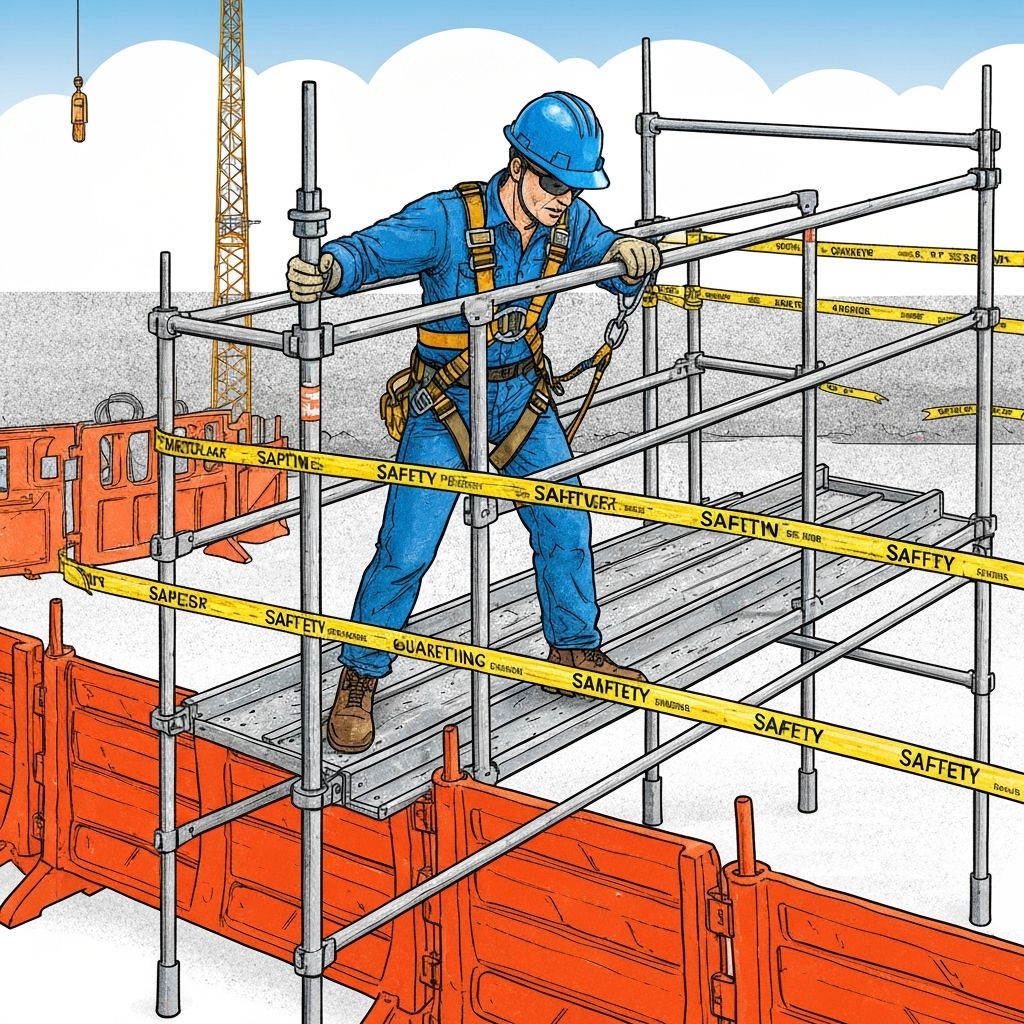
Fall protection is one of the most critical EM385 requirements because falls are the leading cause of construction injuries and fatalities. EM385 requires that any work at heights exceeding six feet must be protected by fall protection systems designed to prevent workers from falling or, if a fall occurs, to arrest the fall before workers strike lower levels or objects. EM385 mandates that contractors use appropriate fall arrest systems, install safety nets, establish warning systems, or provide work platforms depending on the specific hazard and the location where work is being performed. All fall protection equipment must be properly installed according to manufacturer specifications and industry standards, must be maintained in good working condition throughout the project, and must be inspected daily before work begins to ensure that no damage or defects have developed. Fall protection training is mandatory for all personnel who work at heights and must cover fall hazard recognition, proper use of different types of fall protection equipment, limitations of different systems, and emergency rescue procedures if a worker becomes suspended in a fall arrest system. Personal fall arrest systems typically consist of a safety harness that distributes fall forces across a worker's body, a lanyard that connects the worker to an anchor point, and an anchor point that is independently verified to have sufficient strength to stop a falling worker. Safety nets are required in areas below work platforms where it is not practicable to install guardrails or personal fall arrest systems, and nets must be installed and maintained according to OSHA requirements. Warning lines are installed to mark the edges of elevated work areas and alert workers to fall hazards, while barriers and guardrails with mid-rails and toe boards provide physical protection on elevated platforms. Daily inspection of all fall protection equipment is mandatory before work begins, and any equipment showing signs of damage, wear, or defects must be removed from service immediately. Anchor points must be independently verified for structural strength, typically by a qualified structural engineer or other qualified professional, to ensure that they can withstand the forces generated by a falling worker. Ancillary equipment such as snap hooks, D-rings, and shock absorbers must be properly sized and rated for the loads they will experience. A rescue plan must be established and communicated to all personnel for any work situation where workers may become suspended in fall arrest systems, and rescue equipment must be immediately available to perform rescue operations.
Scaffolding Safety Procedures
Scaffolding is extensively regulated under EM385 because unsafe scaffolding has caused serious accidents and fatalities on construction sites. All scaffolding must be designed by qualified designers, typically structural engineers with experience in temporary structures, and the design must comply with OSHA standards and manufacturer specifications for all components. A competent person, defined as someone with the ability to recognize hazards and the authority to take corrective action, must oversee all scaffolding operations including erection, use, and dismantling. Daily pre-use inspection by a competent person is required before workers are permitted to use the scaffolding, and any deficiencies discovered during inspection must be corrected before work begins. Load capacity limits must be clearly posted on the scaffolding so that all workers understand the maximum load that the structure can safely support, and these limits must be enforced through supervision and worker training. Cross-bracing is required to maintain structural integrity and prevent collapse, guardrails with appropriate height must be installed to prevent workers from falling off elevated platforms, and toe boards must be installed to prevent tools and materials from falling onto workers below. Access to scaffolding must be provided through ladders or stairs rather than allowing workers to climb on the framework, which can damage connections and create hazard exposure. Erection and dismantling of scaffolding must be supervised by a competent person and must follow a specific plan to ensure structural stability throughout the process. Weather considerations are important because high winds can create instability, ice and snow can create slipping hazards on work platforms, and heavy rain can affect ground conditions under outriggers or support points. Electrical hazards must be managed by maintaining clearance from power lines, typically a minimum of ten feet, to prevent accidental contact. Suspension systems used for suspended scaffolding must be inspected and maintained properly, with all cables, ropes, and mechanical systems checked regularly for signs of deterioration or damage.
Personal Protective Equipment (PPE) Requirements
EM385 mandates comprehensive personal protective equipment use on all construction sites because PPE provides the last line of defense against hazards that have not been eliminated or controlled through engineering or administrative measures. Hard hats are required in all construction areas where there is potential for objects to fall from above or for workers to strike their heads on fixed objects, and hard hats must be replaced if damaged or after a significant impact. Eye and face protection must be provided based on a hazard assessment of specific work activities, and the type of protection selected must match the nature of the hazard, ranging from basic safety glasses for dust hazards to specialized welding helmets with appropriate filters for welding operations. Hearing protection is required for workers exposed to noise levels exceeding eighty-five decibels, and the appropriate type and rating of hearing protection must be selected based on the specific noise level and frequency composition of the noise. Respirators are required for workers exposed to dust, fumes, or chemical vapors that could harm respiratory health, and proper fit testing and medical evaluations must be performed before workers begin using respiratory protection. Safety footwear with impact-resistant and penetration-resistant soles is required for all construction workers to protect against injuries from dropped objects or sharp objects on the ground. High-visibility clothing with reflective elements must be worn when workers are near traffic or operating mobile equipment to increase visibility. Chemical-resistant gloves and clothing must be provided for workers handling hazardous materials, with the specific materials selected based on the chemicals being handled. Daily inspection and replacement of damaged or defective PPE is mandatory, and workers must be trained on the proper use and maintenance of all PPE so that equipment remains effective throughout its use.
Hazard Communication and Safety Planning
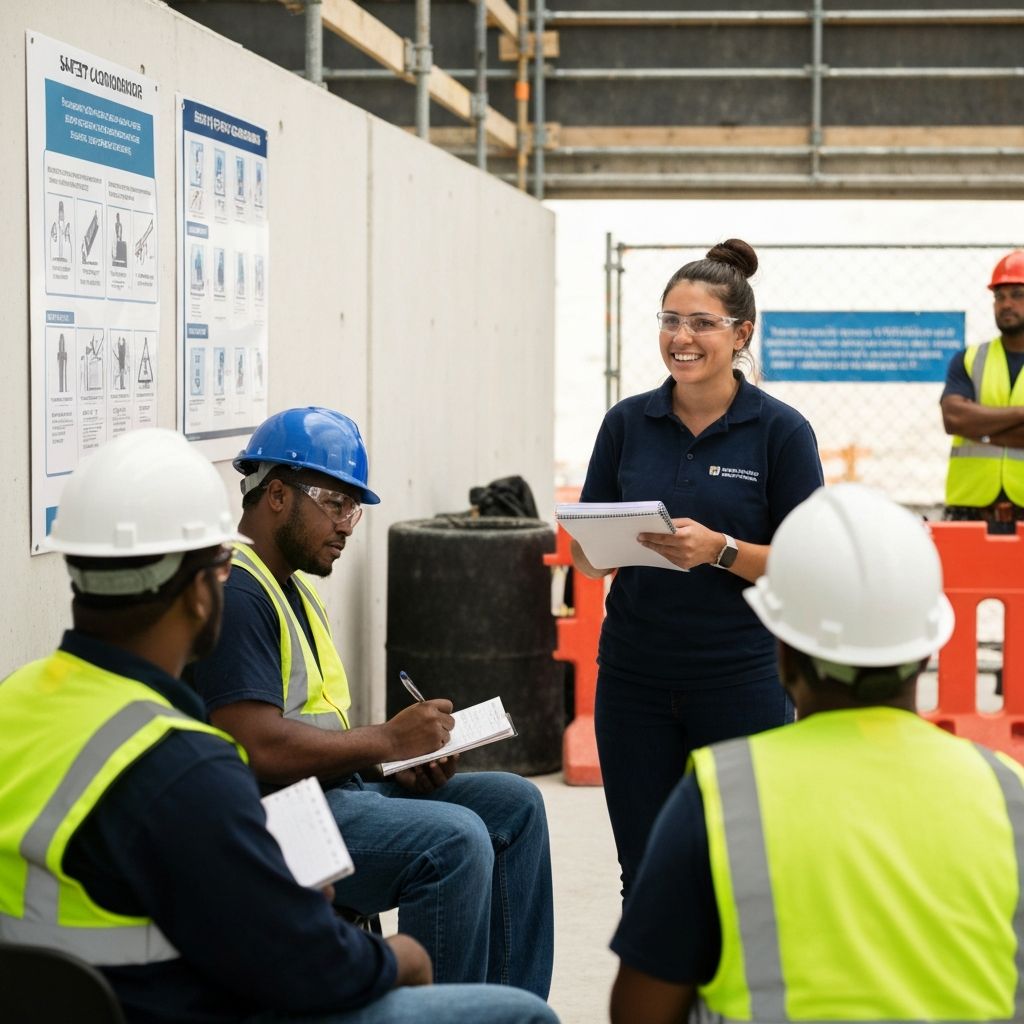
EM385 requires comprehensive hazard communication to ensure that all workers understand the hazards present on the project and know how to work safely. Contractors must identify all hazards on the project through a systematic hazard assessment process and must communicate control measures to all personnel through multiple communication channels. Daily safety briefings are required before work begins each day, and these briefings must address the specific work activities planned for that day and the hazards associated with those activities. A Site Safety Officer must be designated for every project and must be present on-site during all work activities to oversee safety implementation and respond to safety issues. Hazard identification must address both environmental hazards created by the site conditions and task-specific hazards created by particular work activities. Control measures must address the hierarchy of controls, beginning with engineering controls that eliminate or reduce hazards through equipment or process design, followed by administrative controls that establish procedures or practices to reduce hazard exposure, and finally personal protective equipment that protects workers from residual hazards. Material Safety Data Sheets must be accessible to all workers who may handle hazardous materials, and workers must be trained on hazard information and safe handling procedures. Warning signs and barriers must be installed to mark hazardous areas and alert workers to specific hazards. A safety committee with representatives from management and workers should hold monthly meetings to discuss safety performance, review incidents and near-misses, and identify opportunities for improvement. Incident reporting procedures must require immediate notification of any injuries to supervisory personnel and the Site Safety Officer so that appropriate medical care can be provided and investigations can begin promptly. Near-miss reporting must be encouraged to identify hazards before they result in injuries, and workers should be assured that reporting near-misses will not result in negative consequences. Corrective actions must be documented when hazards or unsafe conditions are identified, and these actions must be tracked to completion to ensure that problems are actually resolved.
Electrical Safety and Struck-by Prevention
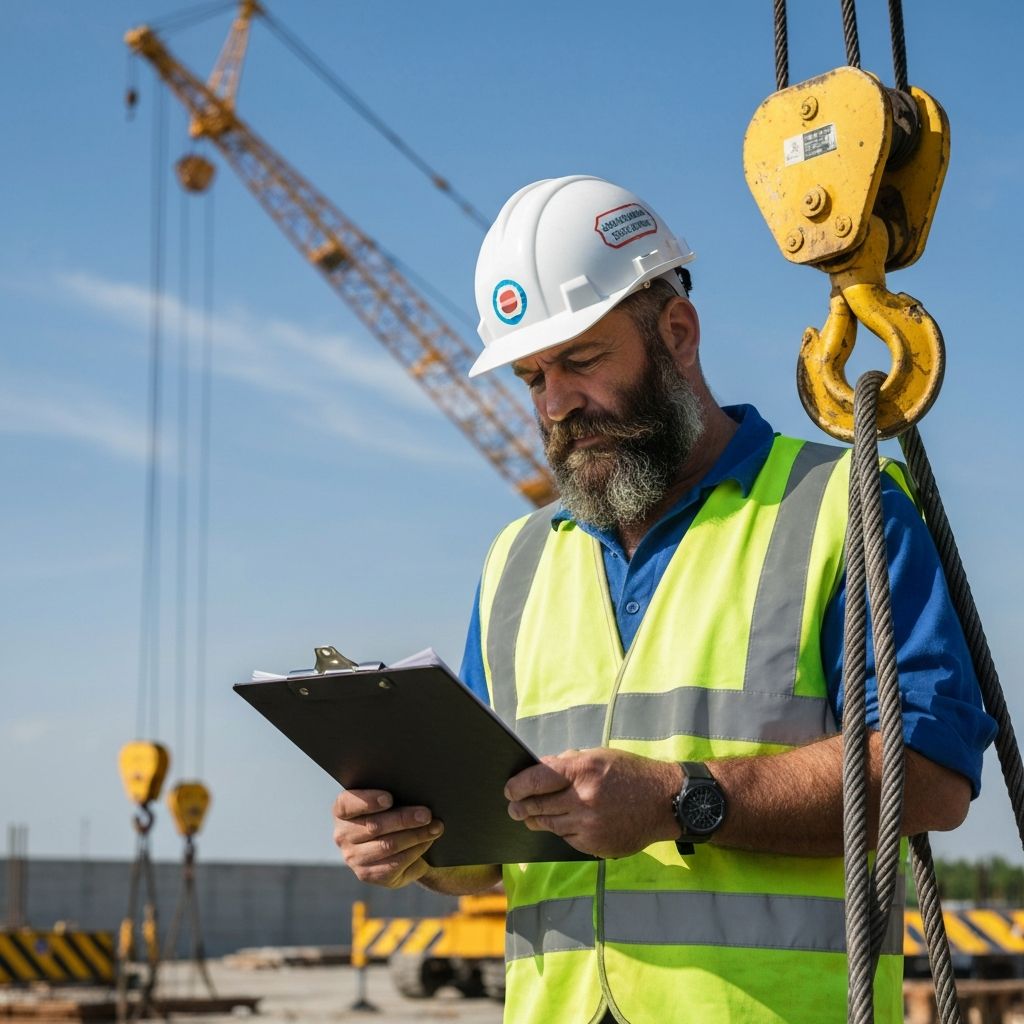
Electrical hazards and struck-by incidents are major construction dangers that must be specifically addressed in safety planning on USACE projects. Power line safety is critical because contact with energized power lines can be immediately fatal, and power line clearance of a minimum of ten feet for most voltage levels must be maintained at all times during construction activities. Ground-fault circuit interrupter protection must be provided for all temporary electrical equipment to prevent electrocution hazards from damaged cords or faulty equipment. Equipment grounding must be verified through continuity testing to ensure that all metal parts of equipment are properly grounded to protect against electrical hazards. Lockout and tagout procedures must be established for all equipment maintenance activities to prevent unexpected startup that could cause injury to maintenance personnel. Struck-by prevention requires the installation of barriers and warning signs to establish exclusion zones around areas where hazards exist, such as areas beneath falling objects or near mobile equipment. Spotters must be assigned and positioned to observe blind spots during equipment operations to alert operators to workers or obstacles that might not be visible from the operator's position. High-visibility equipment including painted equipment frames and rotating beacons on equipment, combined with high-visibility clothing worn by workers, helps ensure that workers and equipment operators can see each other. Excavation near utilities must be preceded by locating and marking existing utilities such as electrical lines, water mains, gas lines, and communication cables to prevent accidental contact. Crane operations must be conducted by authorized operators who hold appropriate certifications, and crane operations must be supervised by qualified riggers who understand load configurations and rigging procedures. Site traffic control procedures must establish reduced speed limits in work areas to reduce the severity of potential struck-by incidents if contact occurs between workers and equipment or vehicles.
USACE Safety Inspection Process
USACE employs trained safety inspectors who conduct regular inspections of all projects to verify compliance with EM385 requirements and to monitor safety performance. These inspectors make unannounced visits to projects at various times to observe work conditions and inspect safety procedures and equipment. A pre-construction conference is held before work begins on every USACE project, at which time USACE safety representatives review EM385 requirements with the contractor and discuss project-specific safety concerns and expectations. Routine inspections are typically conducted on a weekly or bi-weekly basis depending on the level of risk associated with the project activities, with higher-risk projects receiving more frequent inspections. Inspection focus areas typically include high-risk activities such as work at heights or heavy equipment operations, and new work phases as the project transitions to different activities. Violations of EM385 requirements are documented through deficiency reports that detail the specific violation, the potential consequences if the violation continues, and the timeframe for corrective action. Contractors must respond to violations by taking corrective action to bring the project back into compliance, and failure to take corrective action can result in escalating enforcement actions. USACE inspectors have authority to halt work for imminent danger situations where workers face immediate risk of serious injury or death, and work cannot resume until the hazard is eliminated or controlled. Serious or repeat violations can result in contractor removal from the project or even debarment from future USACE contracts. For serious accidents involving injury or fatality, USACE participates in accident investigation to determine root causes and identify systemic improvements. Lessons learned from accidents or serious violations are documented and shared across multiple USACE projects to prevent similar incidents from occurring elsewhere.
Conclusion
USACE EM385 compliance is non-negotiable on all Army Corps of Engineers construction projects because the safety of workers, protection of equipment, and successful project delivery depend on effective safety management. Safety requirements cover all aspects of construction work from initial hazard identification through emergency response procedures, and contractors must maintain compliance throughout all project phases. Contractors, safety personnel, and all construction workers must understand EM385 requirements and actively implement them daily to prevent accidents and ensure project success. VSG provides comprehensive EM385 safety compliance services including safety planning, hazard assessment, training delivery, inspection support, and incident investigation assistance. Contact us for expert guidance on EM385 compliance for your USACE construction project.
Related Testing Services
- Fall Protection System Inspection
- Scaffolding Safety Verification
- Electrical Safety Testing
- Hazard Assessment
- Safety Training Verification
Applicable Standards
Professional Engineering Support
This testing and verification work is part of comprehensive construction management and quality assurance services provided by our architectural and engineering consulting team. We support project management, quality control, and commissioning across military, nuclear, infrastructure, and commercial sectors.
Request Engineering Services