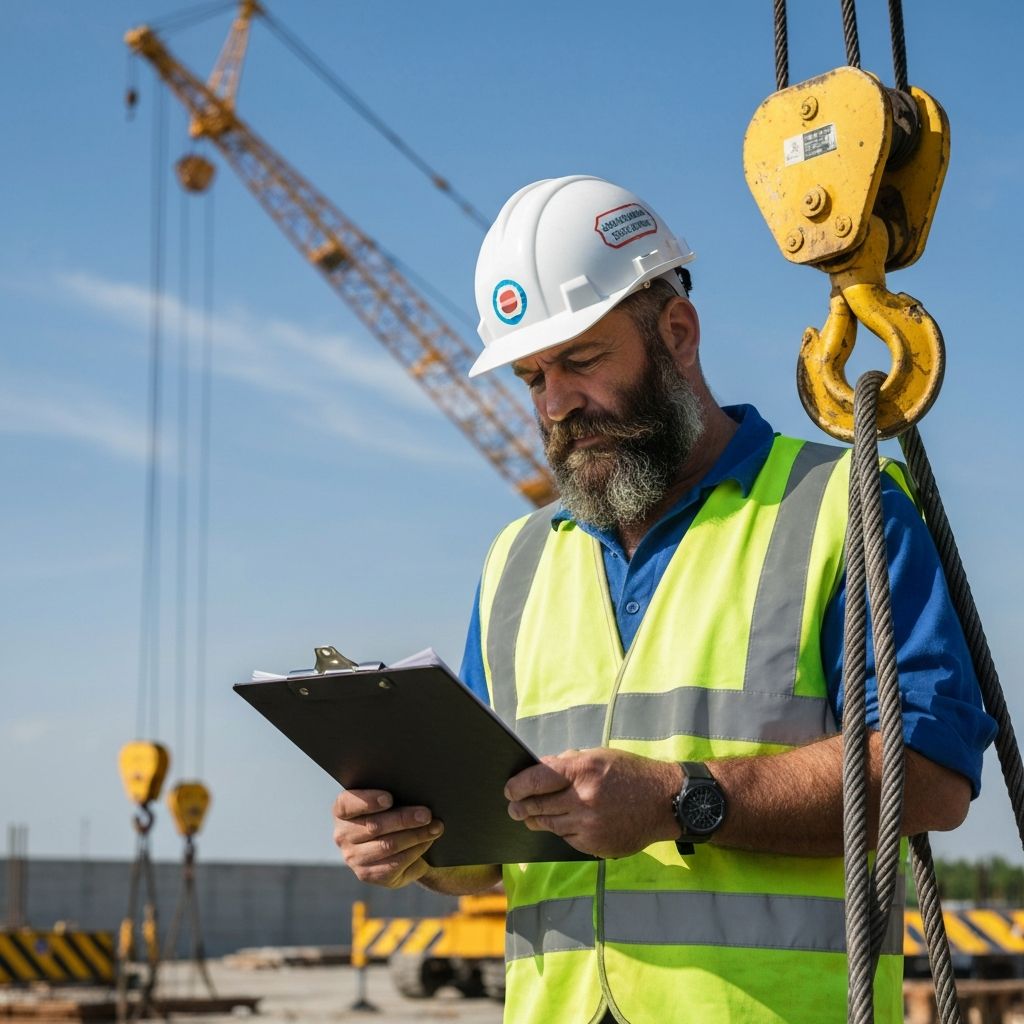
The Accident Prevention Plan (APP) is the cornerstone of safety management on every Army Corps of Engineers construction project. Established under EM385-1-1, the Accident Prevention Plan is a comprehensive, site-specific document that outlines how a contractor will identify, assess, and control hazards throughout all project phases. Unlike generic safety policies, an effective Accident Prevention Plan addresses the unique conditions, work methods, and hazards present on a particular construction site. The plan serves as the contractual commitment between the contractor and the Army Corps of Engineers to maintain a safe working environment, prevent injuries and fatalities, protect equipment and materials from damage, and ensure project success. Every contractor working on USACE projects must prepare a detailed Accident Prevention Plan that is reviewed and approved before construction begins. This foundational safety document must be actively implemented throughout the project, continuously updated to reflect changing conditions, and regularly reviewed for effectiveness.
Foundational Principles of the Accident Prevention Plan
The Accident Prevention Plan is built on several fundamental principles that guide construction safety management. The first principle is hazard identification and assessment, which requires contractors to systematically examine all work activities, equipment, materials, and site conditions to identify potential hazards before workers are exposed to them. This proactive approach allows the contractor to implement control measures that eliminate or minimize risks before accidents occur. The second principle is management responsibility and accountability, which establishes clear leadership for safety performance. The project manager, safety officer, foremen, and all supervisory personnel share responsibility for safety implementation. This includes providing resources for safety programs, ensuring worker compliance with safety procedures, and holding themselves accountable for safety outcomes. The third principle is worker participation and communication, which recognizes that construction workers have valuable insight into the hazards and challenges on their projects. An effective Accident Prevention Plan includes mechanisms for workers to report hazards, participate in safety meetings, and contribute ideas for improving safety. The fourth principle is continuous improvement through monitoring and evaluation. Contractors must measure their safety performance, investigate accidents and near-misses to identify root causes, and modify procedures and practices based on lessons learned. The Accident Prevention Plan is not a static document but a living program that evolves as the project progresses and circumstances change.
Project-Specific Hazard Identification and Analysis
A critical component of the Accident Prevention Plan is the systematic identification and analysis of project-specific hazards. This process begins during project planning when the contractor reviews the project specifications, site conditions, work methods, and equipment to develop a comprehensive hazard list. The contractor must identify not only the obvious hazards associated with construction trades but also the unique hazards created by the specific project environment. For example, a USACE project located in an urban area near existing structures and utilities presents different hazards than a remote project in a rural setting. A project involving work at heights near water requires different control measures than a project on solid ground. A project using specialized heavy equipment presents different hazards than a project using conventional construction methods. The hazard identification process must be thorough and systematic, involving the project team including the project manager, safety officer, foremen, and representatives from major trades. Each identified hazard must be assessed for the severity of potential injury, the likelihood of exposure, and the vulnerable population. This risk assessment determines the priority for control measures, with high-risk hazards receiving immediate attention and resource allocation. The Accident Prevention Plan must document all identified hazards, the assessment of risk, and the specific control measures that will be implemented to manage each hazard. As the project progresses and new work activities begin, the contractor must continue the hazard identification and risk assessment process, updating the plan to address emerging hazards and modified work methods.
Organizational Structure and Accountability for Safety
The Accident Prevention Plan must clearly establish the organizational structure for safety management and define the roles and responsibilities of all personnel involved in safety implementation. The project must have a designated Site Safety Officer or Safety Manager who reports directly to the project manager and has authority and responsibility for all safety matters on the project. The Safety Officer must have adequate training and experience in construction safety, must be present on the project site during all work activities, and must have the authority to halt any work deemed unsafe or in violation of the safety plan. In addition to the Site Safety Officer, the plan must identify the project manager's role in providing overall leadership and resources for the safety program, the foreman's role in supervising workers and ensuring compliance with safety procedures, and the responsibilities of supervisory and lead worker positions. The plan must also identify the contractors and subcontractors involved in the project, establish a clear chain of command for safety communication and decision-making, and establish procedures for ensuring that all contractors and subcontractors are informed of and comply with the safety requirements. Accountability mechanisms must be clearly established, including consequences for safety violations ranging from verbal warnings to removal from the project for serious breaches. The plan should also establish reward systems for positive safety performance and recognition of individuals or teams that demonstrate exemplary safety commitment. This organizational structure ensures that safety is not an afterthought but is integrated into the project management structure with dedicated personnel and resources.
Specific Hazards and Required Control Measures
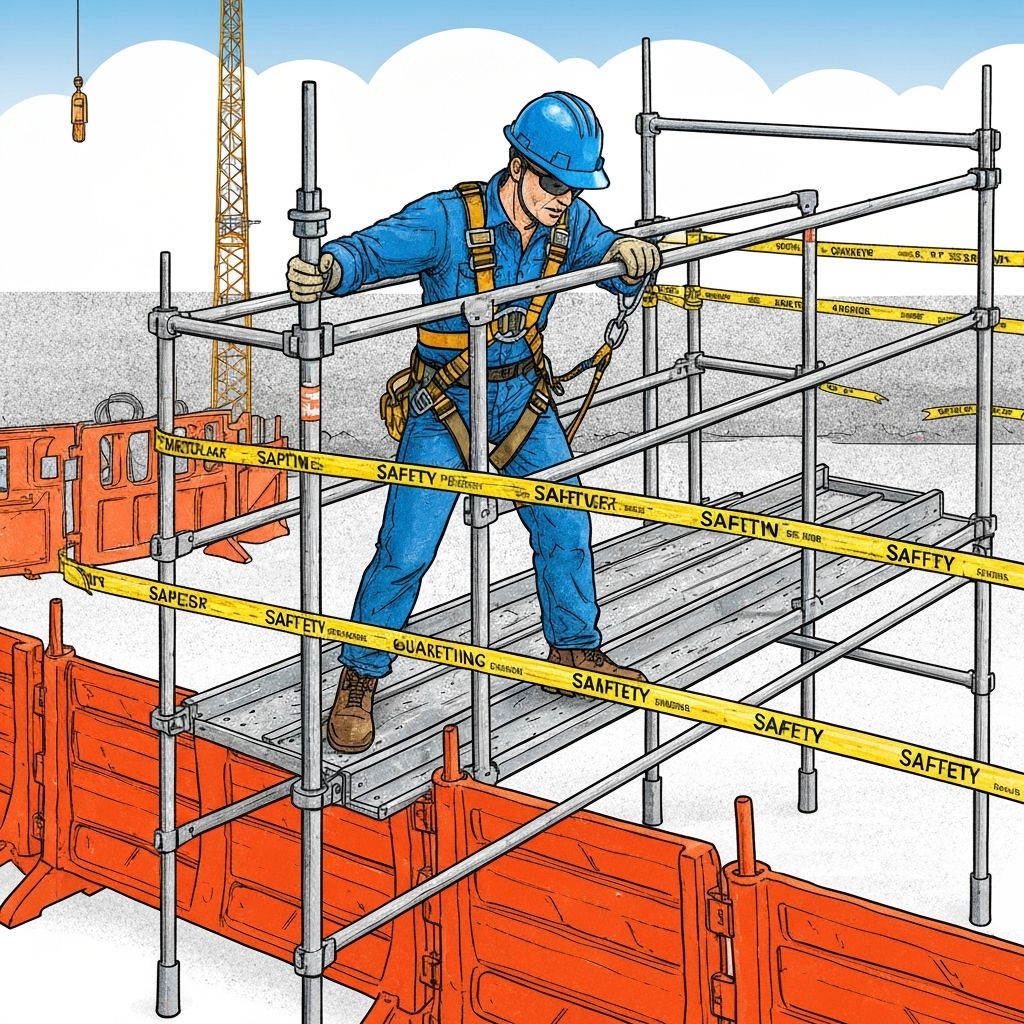
The Accident Prevention Plan must address specific hazards that are common to construction work and identify the specific control measures that will be implemented to manage each hazard. Falls represent the most frequent cause of construction injuries and fatalities, making fall protection a critical component of every Accident Prevention Plan. The plan must describe the specific activities that involve fall hazards, identify the heights and exposures, specify the type of fall protection that will be used (such as personal fall arrest systems, safety nets, guardrails, or warning lines), and establish procedures for the inspection and maintenance of fall protection equipment. The plan must also establish procedures for rescue of workers who have fallen and become suspended in fall arrest systems, recognizing that suspended worker rescue is time-critical and must be coordinated with emergency services. Struck-by incidents, which occur when workers are struck by moving objects or equipment, are another leading cause of construction injuries. The Accident Prevention Plan must identify specific activities that create struck-by hazards, such as heavy equipment operation, material handling, or work near traffic, and specify the control measures that will be implemented to protect workers from these hazards. Control measures might include barriers and warning signs to establish exclusion zones, spotters and communication systems for equipment operations, high-visibility clothing and equipment to increase worker visibility, and reduced speed limits for equipment movement in work areas. Caught-in or caught-between incidents occur when workers are caught between moving or stationary objects, and these incidents often result in severe injuries. The plan must identify machinery, equipment, and processes that create these hazards and specify the lockout and tagout procedures that will prevent unexpected startup during maintenance or repair activities. Electrical hazards present serious risks on construction sites, as electrical shock can be fatal or cause severe burns. The Accident Prevention Plan must establish procedures for working near electrical hazards, including maintaining safe distances from power lines, providing ground-fault circuit interrupter (GFCI) protection for temporary electrical equipment, and ensuring that electrical equipment is properly grounded and maintained. Excavation and trenching activities create significant hazards, including cave-in potential, atmospheric hazards, and contact with underground utilities. The plan must establish procedures for protective systems such as shoring, sloping, and shielding to prevent cave-ins, procedures for atmospheric monitoring and ventilation to prevent atmospheric hazards, and procedures for locating and protecting underground utilities before excavation begins.
Personal Protective Equipment and Work Methods
The Accident Prevention Plan must address the selection, provision, use, and maintenance of personal protective equipment required for all project activities. While personal protective equipment is considered the last line of defense and should only be used when engineering controls and administrative controls are insufficient to eliminate or reduce hazards, it is nonetheless an essential component of construction safety. The plan must identify the specific personal protective equipment that will be required for each type of work activity, including the level of protection required for different hazard exposures. Hard hats must be worn in all construction areas where there is a potential for objects falling from above or workers striking their heads on fixed objects. The plan must specify the type of hard hat appropriate for the work environment and establish procedures for replacement of damaged hats. Eye and face protection is required for activities that create risks of flying objects, sparks, or chemical splashes, and the plan must identify which activities require specific types of eye protection such as safety glasses, safety goggles, or welding helmets with appropriate filters. Hearing protection is required for workers exposed to noise levels exceeding 85 decibels, and the plan must establish procedures for noise monitoring, selection of appropriate hearing protection based on the noise level, and training of workers in proper use and maintenance of hearing protection devices. Respiratory protection is required for workers who may be exposed to hazardous dusts, fumes, or vapors, and the plan must establish procedures for hazard assessment, selection of appropriate respiratory protection, fit testing of respirators, and medical evaluations to ensure that workers can safely use respiratory protection. Safety footwear with impact and penetration-resistant soles is required for all construction workers to protect against injuries from dropped objects or sharp objects on the ground. Hand protection, appropriate for the specific tasks being performed, must be provided and workers must be trained in proper use. Chemical-resistant gloves and clothing must be provided for workers handling hazardous materials. The plan must also address work methods and practices that reduce hazard exposure, such as requiring workers to maintain three-point contact while climbing ladders or stairs, establishing procedures for safe tool use and handling, and implementing housekeeping procedures to maintain clean and organized work areas that reduce trip and slip hazards.
Site-Specific Safety Rules and Worker Conduct Standards
The Accident Prevention Plan must establish clear site-specific safety rules that address the unique hazards and conditions of the project. General construction safety rules might include requirements that all workers must report to the Site Safety Officer on their first day of work and receive project safety orientation, that all workers must comply with all provisions of the Accident Prevention Plan and EM385 requirements, that all workers must wear the required personal protective equipment while in construction areas, and that all workers must immediately report any unsafe conditions or near-miss incidents to their supervisor. The plan must establish rules regarding substance abuse, recognizing that alcohol and drug use impairs judgment and significantly increases accident risk on construction sites. Many USACE projects require drug and alcohol testing, and contractors must have clear policies regarding testing requirements, positive test results, and removal of individuals who test positive. The plan should establish rules regarding the use of personal electronic devices such as cell phones, which can distract workers and create safety hazards if workers are not fully attentive to their work environment. Contractors must establish rules that prohibit horseplay and practical jokes on the job site, as these behaviors can distract workers and lead to accidents. The plan should establish rules regarding photography and recording on the project site, as security and privacy concerns may restrict the ability of workers to use personal cameras or cell phones. The plan must establish rules regarding conduct of workers from different contractors and subcontractors to ensure professional behavior and appropriate communication. The plan should also establish procedures for addressing violations of safety rules, including progressive discipline for minor violations and immediate removal from the project for serious violations such as working while under the influence of substances or engaging in actions that directly endanger other workers. These site-specific rules and conduct standards help create a safety-conscious culture where all workers understand expectations and contribute to a safe work environment.
Training Requirements and Competency Verification
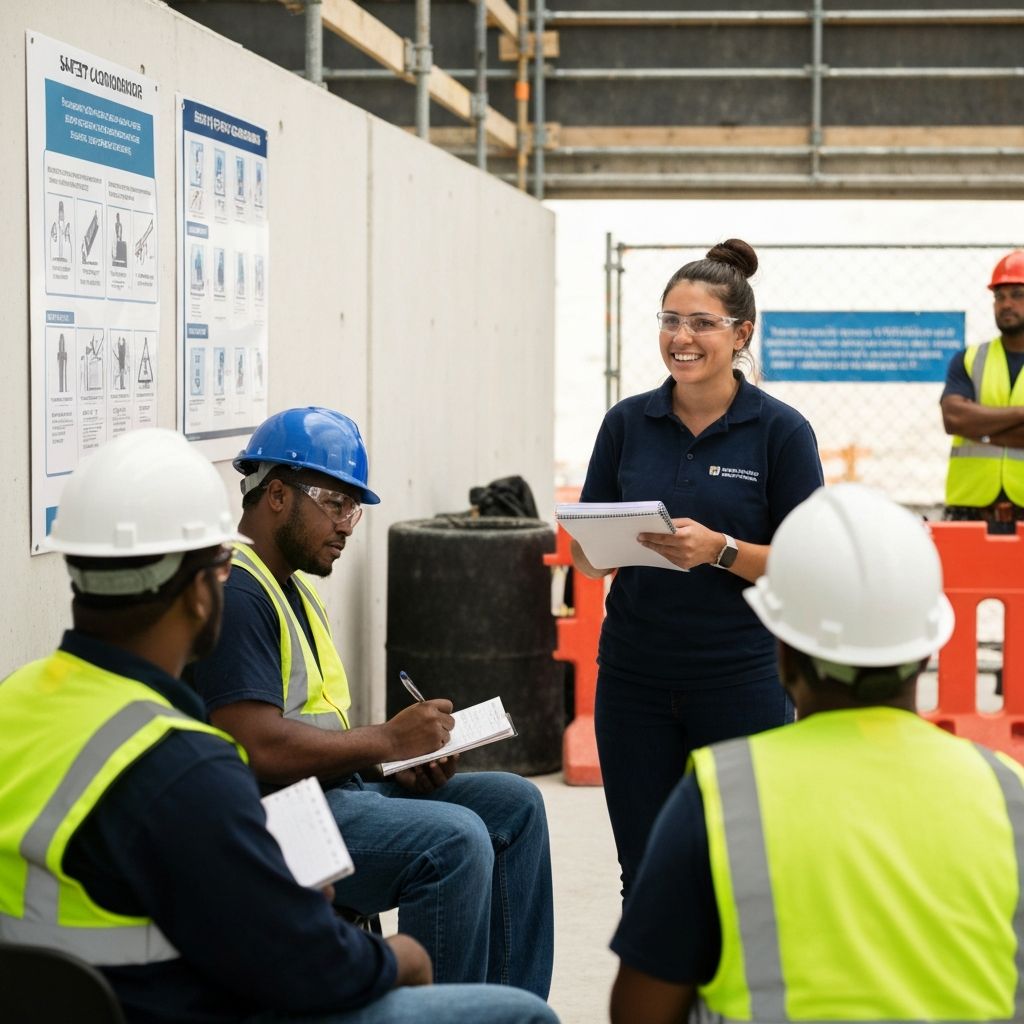
The Accident Prevention Plan must establish comprehensive training requirements to ensure that all workers understand hazards relevant to their work activities and know how to work safely. General construction safety orientation must be provided to all workers on their first day of the project and must cover the hazards present on the project, the provisions of the Accident Prevention Plan, the personal protective equipment required, reporting procedures for unsafe conditions and incidents, and emergency procedures. Project-specific training must be provided to workers in specialized trades or using specialized equipment. Workers who will work at heights must receive fall protection training that covers the hazards of falls, the proper use and inspection of fall protection equipment, rescue procedures, and the limitations and proper use of different types of fall protection systems. Workers who will operate heavy equipment must receive operator certification training and demonstrate competency in equipment operation. Workers who will perform excavation or trenching must receive training in cave-in prevention, atmospheric hazards, underground utility location, and procedures for protective systems. Workers who will handle hazardous materials must receive training in the hazards of the materials, proper handling procedures, personal protective equipment required, emergency procedures for spills or exposures, and emergency response. Workers who will perform hot work such as welding or cutting must receive training in the fire hazards associated with hot work, the fire prevention measures that must be implemented, and the procedures for monitoring for fires after hot work is completed. The plan must establish procedures for verifying that workers have received required training and have demonstrated competency before being permitted to perform hazardous work activities. Training records must be maintained throughout the project to demonstrate compliance with training requirements. The plan should also establish procedures for refresher training and periodic safety briefings to keep workers engaged and focused on safety throughout the project. Training is not a one-time event but an ongoing process that must be continuously reinforced through daily safety briefings, toolbox talks, and regular safety meetings.
Hazard Communication and Daily Safety Communications
The Accident Prevention Plan must establish procedures for ongoing communication regarding hazards and safety requirements throughout the project. Daily safety briefings or toolbox talks must be held at the beginning of each work shift to discuss the specific work activities planned for that day, the hazards associated with those activities, and the specific safety procedures that must be followed. These brief meetings, typically lasting 10 to 15 minutes, help keep safety top-of-mind for workers and ensure that everyone understands the specific hazards and control measures for the day's work. Weekly safety meetings must be held to discuss overall project safety performance, near-miss incidents, and any changes to work methods or procedures that might affect hazards and control measures. Monthly safety meetings must be held with all contractors and subcontractors to ensure that all parties are aligned on safety expectations and performance. The plan must establish procedures for communicating changes in hazards or work methods through formal notifications to all affected workers. The plan must establish procedures for posting safety-related information such as emergency contact numbers, first aid procedures, emergency evacuation routes, and hazard-specific safety instructions in visible locations throughout the project site. Signage must comply with ANSI standards for safety symbols, colors, and message content, ensuring that warning signs effectively communicate hazards and required precautions. The plan should establish procedures for tailgate meetings at specific work locations to address hazards and procedures specific to that location before workers begin work there. The plan must also establish procedures for addressing near-miss incidents through communication and investigation, ensuring that lessons learned from near-miss incidents are communicated to all workers to prevent similar incidents from occurring.
Incident Reporting, Investigation, and Documentation
The Accident Prevention Plan must establish clear procedures for incident reporting, investigation, and documentation that enable the contractor to identify root causes of accidents and near-misses and implement corrective actions to prevent recurrence. The plan should distinguish between near-miss incidents, which are occurrences that could have resulted in injury but did not, injury incidents that result in minor cuts, bruises, or other non-reportable injuries, and serious injury or fatality incidents that require investigation and reporting to USACE and potentially to OSHA. All incidents, including near-misses, must be reported immediately to the Site Safety Officer and the project manager so that investigations can begin promptly while evidence is still available. The plan must establish investigation procedures that include securing the incident scene to preserve evidence, interviewing witnesses and the involved worker while memories are fresh, photographing the scene and relevant equipment or conditions, and collecting any relevant materials or equipment for analysis. The investigation must go beyond identifying the immediate cause of the incident and must identify root causes such as inadequate procedures, insufficient training, inadequate maintenance, or pressure to meet schedules. The investigation must result in identification of corrective actions that address root causes and prevent recurrence, such as procedural changes, additional training, equipment maintenance or replacement, or changes in work methods. The plan must establish procedures for communicating the results of incident investigations to all workers so that lessons learned are shared across the entire project. For serious injuries or fatalities, the plan must establish procedures for notifying USACE and OSHA as required by law and for cooperating with official investigations. The plan must establish procedures for maintaining incident records, including recordkeeping forms, investigation reports, and photographs, and for retaining these records beyond the end of the project for potential future reference or defense against injury-related claims.
Emergency Procedures and Medical Response
The Accident Prevention Plan must establish comprehensive emergency procedures to ensure that workers are prepared for emergencies that may occur on the project. First aid procedures must be established and documented, including the location and availability of first aid supplies and equipment, the names and qualifications of personnel trained in first aid and CPR, and procedures for accessing emergency medical services when injuries exceed the scope of on-site first aid. The plan must establish emergency contact procedures including phone numbers for emergency services, procedures for reporting emergencies to the project manager and USACE, and contact information for workers' families if notification is necessary. The plan must establish evacuation procedures including designated assembly points where workers will gather after evacuating the work area, procedures for accounting for all workers to ensure everyone has evacuated safely, and procedures for communicating all-clear information when workers may safely return to work areas. The plan must establish procedures for response to specific types of emergencies such as fires, electrical shock or electrocution, chemical spills or exposures, and collapse or entrapment of workers. The plan must establish procedures for emergency communication ensuring that all workers are informed of emergency situations and know what actions to take. For projects involving water such as construction on waterfront projects, the plan must establish procedures for water rescue including the availability of rescue equipment such as life rings or rescue boats, training of rescue personnel, and procedures for attempting rescue. The plan must establish procedures for potential use of rescue helicopters if the project is located in an area where helicopter rescue is available. The plan must establish procedures for emergency transportation of injured workers including identification of the nearest hospital or medical facility, directions for access, and procedures for ensuring that injured workers receive appropriate medical attention.
Site Conditions Monitoring and Environmental Hazards
The Accident Prevention Plan must address ongoing monitoring of site conditions and environmental hazards that may change throughout the project. Weather monitoring must be established to ensure awareness of forecasted weather changes that may affect work safety. High wind can create hazards for workers at heights or for equipment operations, and extreme heat or cold can create health hazards. The plan must establish procedures for suspending or modifying work when weather conditions exceed safe operating limits. The plan must establish procedures for continuous monitoring of air quality if the project involves dusty work or operations that generate fumes or vapors. Air quality monitoring may include use of direct reading instruments to measure airborne dust or chemical concentrations, with procedures for implementing additional respiratory protection or suspending work if concentrations exceed acceptable limits. The plan must establish procedures for monitoring ground conditions if the project involves excavation or heavy equipment operation, including checks for ground stability before equipment operation and for water accumulation in excavations. The plan must establish procedures for monitoring water quality if the project is located near water bodies, including notification procedures if water levels rise or water quality degrades. The plan must establish procedures for monitoring noise levels to ensure that workers exposed to noise above 85 decibels are provided appropriate hearing protection. The plan must establish procedures for monitoring lighting conditions and ensuring that adequate lighting is available for all work activities, particularly work performed during early morning hours, late afternoon or evening hours, or work in covered areas. The plan should establish procedures for continuous surveillance of hazardous materials on the site, ensuring that materials are stored and handled properly to prevent spills or exposures. The plan must establish procedures for continuous surveillance of equipment and machinery to identify any maintenance issues that might create safety hazards.
Subcontractor Management and Safety Coordination
The Accident Prevention Plan must address management and coordination of safety for subcontractors and specialty contractors involved in the project. The primary contractor bears responsibility for overall project safety and must establish procedures for ensuring that all subcontractors understand and comply with the Accident Prevention Plan. Subcontractors must be required to submit their own safety plans for activities performed under their contracts, with these plans reviewed by the primary contractor for consistency with the overall project safety plan and for identification of any conflicts that might create hazards. The plan must establish procedures for pre-work meetings with subcontractors to discuss the specific hazards associated with their work, the specific provisions of the Accident Prevention Plan that apply to their activities, and the specific safety procedures that their workers must follow. The plan must establish procedures for ongoing coordination and communication with subcontractors throughout the project to address changes in work methods or site conditions that might affect safety. The plan must establish procedures for enforcement of safety requirements with subcontractors, including right to observe subcontractor work activities, right to require correction of unsafe conditions, and procedures for removal of subcontractor personnel from the project if they violate safety requirements. The plan must establish procedures for ensuring that subcontractor personnel receive appropriate training and orientation before beginning work. The plan must establish procedures for coordinating activities of multiple subcontractors when their work activities overlap or create interface hazards, ensuring that coordination procedures address potential conflicts and hazards created by the interaction of different work activities.
Continuous Improvement and Program Evaluation
The Accident Prevention Plan must include provisions for continuous improvement and ongoing evaluation of the safety program to ensure its effectiveness. The plan should establish procedures for collecting safety performance metrics including number of incidents, number of near-miss reports, number of unsafe conditions identified and corrected, lost-work-day rates, and severity of incidents. These metrics provide quantitative measures of safety performance that can be tracked over time to identify whether the safety program is effective or whether modifications are needed. The plan should establish procedures for benchmarking against industry standards and other similar projects to identify opportunities for improvement. The plan should include regular management reviews of safety performance data to identify trends, problem areas, and opportunities for enhancement. The plan should establish procedures for gathering worker feedback on the safety program through worker surveys, group discussions, or suggestion programs, recognizing that workers have valuable insight into the effectiveness of safety procedures and may suggest improvements based on their experience. The plan should establish procedures for periodic audits of safety compliance to verify that safety procedures are being followed as documented and to identify areas where compliance is lagging. The plan should establish procedures for updating the Accident Prevention Plan as the project progresses and circumstances change, ensuring that the plan reflects current work activities and hazards. Annual updates or reviews of the Accident Prevention Plan should be required for projects lasting multiple years. The plan should establish procedures for training of new personnel on updated safety procedures and requirements to ensure that all workers remain current on safety expectations and procedures as the program evolves.
Conclusion
The Accident Prevention Plan is the foundational safety document for all Army Corps of Engineers construction projects and represents the contractor's comprehensive commitment to preventing injuries and fatalities. An effective Accident Prevention Plan identifies project-specific hazards, establishes clear roles and responsibilities for safety management, requires appropriate training and personal protective equipment, establishes site-specific safety rules and conduct standards, and creates continuous feedback mechanisms for improvement. Contractors who develop detailed, site-specific Accident Prevention Plans and actively implement and update them throughout their projects create safer work environments, reduce accident rates and injury severity, protect their workers from harm, and demonstrate their commitment to safety excellence. VSG provides comprehensive Accident Prevention Plan development, safety program implementation, training delivery, and USACE compliance support to help contractors establish effective safety programs that protect their workers and ensure project success. Contact us for expert assistance with your Accident Prevention Plan and overall USACE construction safety program.
Related Testing Services
- Safety Program Audit
- Incident Investigation
- Hazard Assessment
- Worker Safety Training
- Compliance Verification
Applicable Standards
Professional Engineering Support
This testing and verification work is part of comprehensive construction management and quality assurance services provided by our architectural and engineering consulting team. We support project management, quality control, and commissioning across military, nuclear, infrastructure, and commercial sectors.
Request Engineering Services