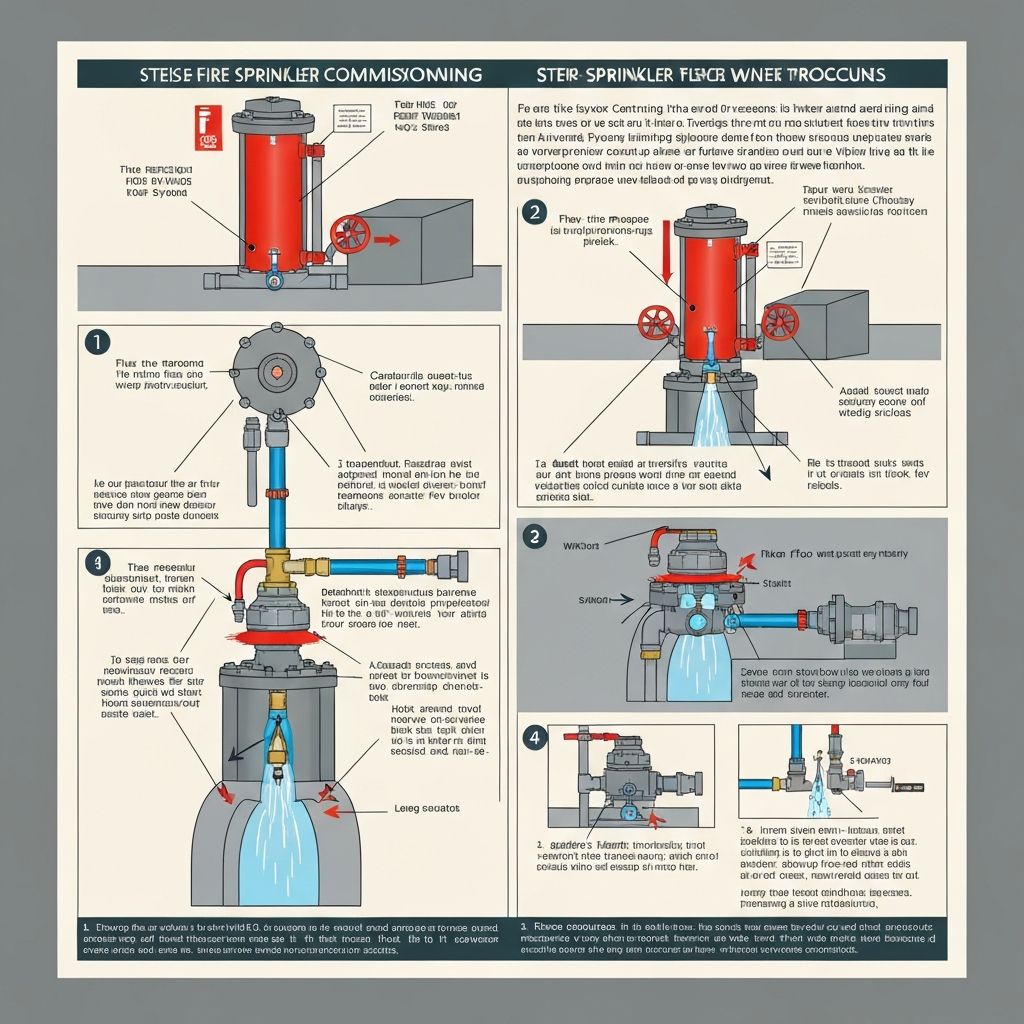
Fire safety systems commissioning ensures all life safety equipment operates correctly in emergency situations. This includes fire sprinkler systems, fire alarm and detection systems, smoke control systems, emergency lighting, fire-rated doors and dampers, and gas suppression systems. Thorough commissioning is legally required and critical for protecting occupants and property. Failures in fire protection systems can have catastrophic consequences.
Fire Sprinkler System Commissioning
Sprinkler systems undergo rigorous hydraulic and functional testing:
- Hydrostatic pressure testing: Verify piping integrity at 200 psi (13.8 bar) for 2 hours minimum
- Main drain flow test: Measure flow and pressure at design discharge to verify water supply adequacy
- Inspector's test connection: Simulate single sprinkler operation and verify alarm signaling
- Dry system trip time testing: Ensure dry pipe and pre-action systems activate within time limits
- Pump performance testing: Verify fire pump delivers rated flow at rated pressure
- Valve supervision: Test tamper switches and ensure all control valves are monitored
Fire Alarm System Verification
Fire alarm commissioning requires testing every initiating device, notification appliance, and control function. Each smoke detector is tested for sensitivity using calibrated test equipment or aerosol. Heat detectors are tested with heat guns. Manual pull stations are activated. Audible and visible notification appliances are verified for coverage and sound levels (minimum 15 dBA above ambient or 75 dBA, whichever is greater). Mass notification and voice evacuation systems are tested for intelligibility.
Smoke Control and Pressurization
Buildings with smoke control systems require functional testing of mechanical smoke exhaust, stairwell pressurization, and elevator pressurization systems. Pressure differentials are measured to ensure protected spaces maintain positive pressure (minimum 12.5 Pa for stairwells). Fan systems are tested in all fire scenarios with appropriate dampers and doors operating. Integration with fire alarm systems is verified.
Emergency Lighting and Egress
Emergency lighting must provide minimum illumination levels on egress paths for the required duration. Testing includes functional operation test, full battery discharge test (minimum 90 minutes at full load), and illuminance measurements along egress routes (minimum 1 lux average, 0.2 lux minimum). Exit signs and photoluminescent markings are verified for visibility and placement.
Conclusion
Fire safety systems commissioning is non-negotiable for building occupancy and life safety code compliance. Our certified fire protection engineers provide comprehensive commissioning for all fire protection systems. Contact us for fire safety commissioning services.
Related Testing Services
- Smoke Detector Sensitivity Testing
- Sprinkler Hydraulic Calculations
- Egress Analysis
- Fire Door Testing
Applicable Standards
Professional Engineering Support
This testing and verification work is part of comprehensive construction management and quality assurance services provided by our architectural and engineering consulting team. We support project management, quality control, and commissioning across military, nuclear, infrastructure, and commercial sectors.
Request Engineering Services