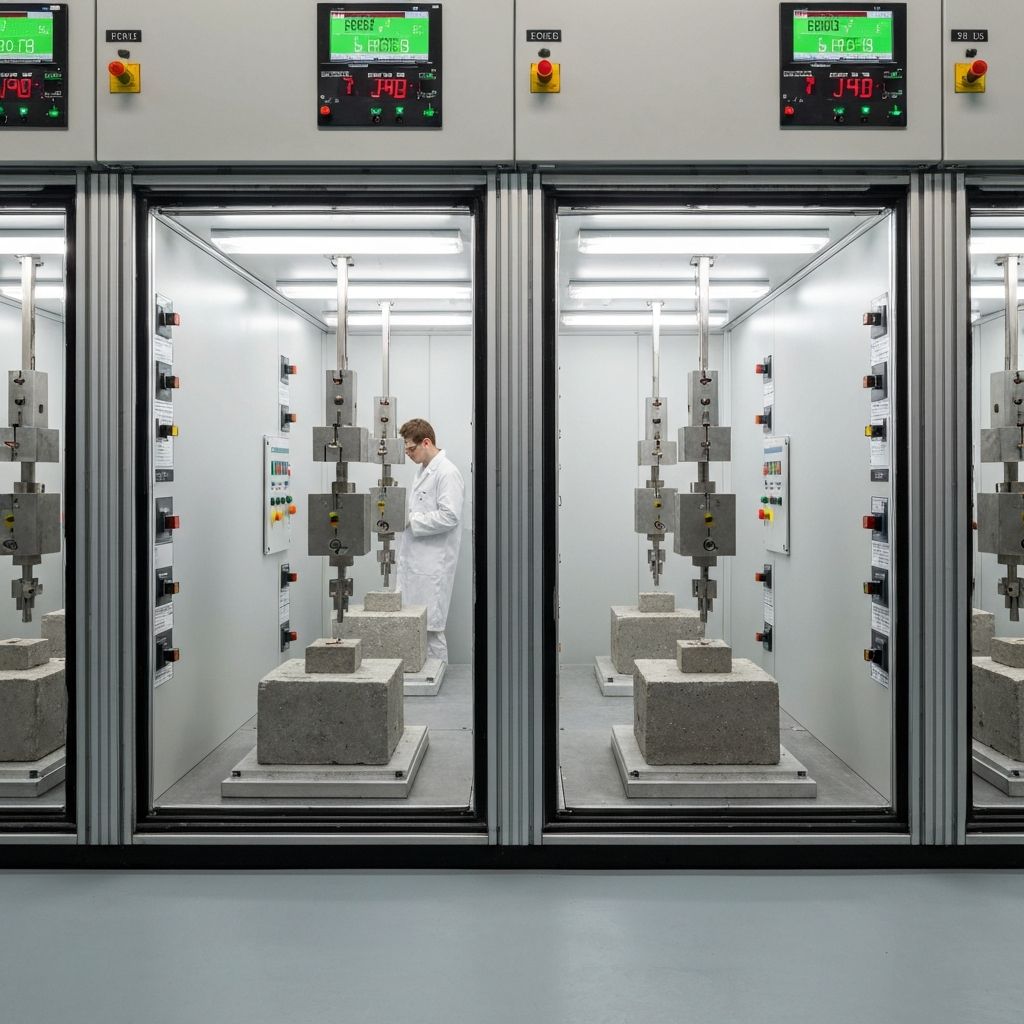
Construction quality control is the systematic process of verifying that materials, workmanship, and constructed systems meet design specifications and project requirements. Quality control encompasses materials testing, inspections, measurements, and documentation to ensure compliance with standards and prevent defects. Effective QC processes identify problems early before costly rework becomes necessary. This comprehensive guide covers QC fundamentals, testing standards, procedures, documentation, and best practices for construction projects globally.
What is Construction Quality Control?
Quality control (QC) is distinct from quality assurance (QA), though these terms are often used interchangeably in construction. QC focuses on verifying that specific work meets requirements through testing, inspection, and measurement. QA focuses on the processes that ensure quality will be achieved. Both QC and QA are essential: QA prevents defects through proper procedures while QC detects defects through testing. Effective construction projects employ both QC for direct verification and QA for process oversight, ensuring comprehensive quality management from materials through final commissioning.
- QC = Verification through testing and inspection of completed work
- QA = Process oversight ensuring quality will be achieved
- QC is reactive (detects problems), QA is proactive (prevents problems)
- Both are required for comprehensive quality management
- Independent QC provides objective third-party verification
- Contractor QC and independent QC serve different purposes
- Documentation of QC results provides evidence of compliance
Why Construction Quality Control Matters
Construction quality directly impacts safety, durability, performance, and life-cycle costs. Poor quality leads to safety hazards, structural failures, leaks, premature deterioration, and costly repairs. For critical infrastructure (military installations, nuclear facilities, high-speed rail), quality failures can have catastrophic consequences. Quality control prevents these outcomes by catching defects before they become embedded in the structure. Early detection through QC enables correction while work is still accessible, preventing exponentially more costly rework later. Investment in thorough QC typically yields 3-5x return through prevented failures and warranty/litigation avoidance.
- Safety: Quality failures can cause structural collapse or injury
- Durability: Poor quality reduces service life from 50+ years to 10-15 years
- Performance: Inadequate quality prevents systems from functioning as designed
- Cost: Early correction through QC is 10-100x cheaper than later rework
- Liability: QC documentation provides evidence of compliance and due diligence
- Warranty: Manufacturers often void warranties if QC procedures weren't followed
- Reputation: Quality problems damage contractor and designer reputation
Construction Quality Control vs Quality Assurance (QC vs QA)
The distinction between QC and QA is fundamental to understanding construction quality management. Quality control is the technical function of measuring and testing specific work products. Quality assurance is the management function of ensuring processes are in place to produce quality work. QC answers 'Does this meet the requirement?' while QA answers 'Will this process produce quality?' In practice, projects need both: QC identifies defects through direct measurement, while QA ensures processes prevent defects. Independent QC provides objective verification unbiased by contractor financial interests.
- QC: Contractor-performed testing of their own work (interested party)
- Independent QC: Third-party testing by neutral provider (objective verification)
- QA: Process oversight by owner/consultant ensuring procedures are followed
- QC Testing: Concrete strength, material properties, dimensional verification
- QA Audit: Process compliance, procedure adherence, documentation completeness
- Combined Approach: QC catches defects, QA prevents defects through process control
International Quality Control Standards
Multiple international standards govern construction quality control with different emphases. North America uses ASTM standards developed by ASTM International. Europe uses EN (European Norm) standards developed by CEN. UK uses BS (British Standard) standards. These standards specify testing procedures, acceptance criteria, and documentation requirements. Major standards include ASTM C192-C666 for concrete, EN 206 for concrete durability, BS 8500 for concrete specifications, ASTM E1444 for appearance quality, and EN 13670 for concrete construction. International projects often reference multiple standards or specify adherence to the most stringent requirement.
- ASTM Standards: North America (US, Canada) - Concrete, masonry, steel testing
- EN Standards: Europe - Concrete design, durability, aggregates, testing
- BS Standards: United Kingdom - Specifications, codes of practice, testing
- ISO Standards: Global application - Quality management, testing procedures
- USACE Standards: Military construction - Often exceeds ASTM/EN requirements
- NATO Standards: Allied military - Technical specifications for defense projects
- Project-specific: Designers often specify more stringent criteria than standards
Construction Quality Control Testing Procedures
QC testing encompasses materials testing (concrete, steel, masonry, aggregates), workmanship inspection (dimensions, alignment, connections), and systems testing (mechanical, electrical, fire protection). Materials testing verifies that delivered products meet specifications before use in construction. Workmanship inspection verifies that installation meets drawings and specifications. Systems testing verifies that completed systems function as designed. Testing frequency depends on material criticality and quantity. Major concrete pours may require one test per 100 cubic meters or daily, whichever is more frequent. Structural steel connections may require 100% inspection of critical connections. Documentation of all QC testing provides evidence of compliance.
- Materials Testing: Concrete strength, aggregates soundness, steel tensile properties
- Fresh Concrete Testing: Slump, air content, temperature during placement
- Hardened Concrete Testing: Compressive strength, cores, durability tests
- Masonry Testing: Unit properties, mortar strength, flexural bonding
- Steel Testing: Tensile properties, hardness, weld quality (visual, UT, PT, RT)
- Workmanship Inspection: Dimensions, alignment, connections, cleanliness
- Systems Testing: Mechanical commissioning, electrical functionality, fire protection
- Documentation: Test certificates, photos, corrective action records
Quality Control Documentation and Compliance Evidence
Comprehensive documentation of QC activities provides essential evidence of compliance with specifications, standards, and regulatory requirements. Documentation includes test certificates with results and acceptance/rejection status, inspection reports with photos showing work condition, corrective action notices documenting problems and resolutions, and as-built records showing what was actually installed. This documentation serves multiple purposes: proves compliance to regulatory agencies, provides evidence for insurance/warranty claims, supports litigation defense if disputes arise, and creates permanent record of project quality history. Digital documentation systems enable real-time reporting and trending of quality metrics.
- Test Certificates: Results, dates, tested material/work identification, pass/fail status
- Inspection Reports: Photos, dimensions, conditions, acceptance/rejection decision
- Corrective Action Notices: Problem description, root cause, correction action, verification
- Daily Reports: Work performed, QC activities completed, issues identified
- Monthly Reports: Trend analysis, problem patterns, contractor performance rating
- Photographic Documentation: Before/during/after photos for all critical work
- As-Built Records: Actual materials/methods used, deviations from specifications
Quality Control Procedures in Practice
Effective QC execution requires detailed procedures, trained personnel, and systematic implementation. QC procedures should specify: what gets tested (materials, workmanship, systems), when testing occurs (before use, during placement, after curing), how often (frequency requirements), acceptance criteria (what results are acceptable), and documentation (how results are recorded and communicated). QC personnel must be trained in testing standards, equipment operation, and documentation procedures. QC leads should have certifications (ACI, NRMCA for concrete; AWS for welding; ICC for special inspections). Daily QC meetings review planned testing, discuss results, identify issues, and coordinate corrective actions.
- QC Plan Development: Define testing requirements, acceptance criteria, procedures
- Personnel Qualification: Certifications (ACI, AWS, ICC), training, experience verification
- Equipment Calibration: Annual calibration of test equipment per ASTM standards
- Supplier Verification: Verify materials meet specifications before use in construction
- Testing Schedule: Plan daily/weekly testing based on construction schedule
- Result Documentation: Immediate recording of test results with identification
- Trending & Analysis: Monthly trend analysis of defect patterns and improvements
- Daily QC Meetings: Review planned work, discuss test results, coordinate corrections
Independent vs Contractor Quality Control
Contractor QC verifies their own work but may have financial incentives to minimize reporting of defects. Independent QC by neutral third parties provides objective verification without financial conflicts of interest. Military and public works projects typically require independent QC by design team or independent testing laboratory. Independent QC personnel report to project owner or designer, not to contractor. This independence ensures that defects are reported honestly without concern about contractor reaction or payment delays. Independent QC costs typically 2-4% of construction cost but provide essential protection of owner interests and assurance of quality.
- Contractor QC: Performed by contractor for their own work (interested party)
- Independent QC: Third-party neutral testing and inspection (objective verification)
- Dual QC: Both contractor and independent QC testing for critical elements
- Independent reporting: QC results go to owner/designer, not to contractor
- Conflict resolution: Independent QC provides neutral perspective on disputes
- Owner confidence: Independent QC assures owner of actual quality levels
- Cost benefit: Independent QC cost justified by prevention of costly failures
Quality Control for Special Environments
Certain project types require specialized QC procedures beyond standard construction. Military installations require USACE-certified inspectors and enhanced documentation. Nuclear construction requires quality levels 10-20x more rigorous than commercial construction with 100% inspection of critical items. Radiation shielding concrete requires specialized aggregate sourcing and testing. Hydroelectric facilities require extensive grouting QC. High-speed rail requires ultra-precise dimensional verification. Water treatment plants require specialized testing of treatment systems. These specialized QC requirements demand experienced personnel familiar with regulatory requirements specific to each project type.
- Military Projects: USACE approval of QC procedures, increased inspection frequency
- Nuclear Construction: 10 CFR Part 50 Appendix B requirements, 100% inspection items
- Hydroelectric: Grouting QC, dam foundation verification, seepage monitoring
- Water Treatment: System commissioning testing, operational compliance verification
- High-Speed Rail: Dimensional precision QC, geometry verification every 50-100m
- Underground Construction: Shotcrete QC, bolt installation verification, convergence monitoring
- Offshore Structures: Corrosion protection QC, marine environment durability testing
Conclusion
Construction quality control is essential for ensuring projects meet specifications, standards, and performance requirements. Effective QC combines independent materials testing, workmanship inspection, and systems verification with comprehensive documentation. VSG provides expert QC services including on-site inspections, materials testing, special inspector services, and quality documentation for military, nuclear, infrastructure, and commercial projects. Contact us to establish comprehensive QC procedures for your project ensuring compliance and preventing costly quality failures.
Related Testing Services
- Concrete Compressive Strength Testing
- Concrete Slump Testing
- Air Content Testing
- Steel Tensile Testing
- Masonry Unit Testing
- Roofing Membrane Testing
- Mechanical Systems Testing
Applicable Standards
Professional Engineering Support
This testing and verification work is part of comprehensive construction management and quality assurance services provided by our architectural and engineering consulting team. We support project management, quality control, and commissioning across military, nuclear, infrastructure, and commercial sectors.
Request Engineering Services