The selection of structural wall materials significantly impacts project cost, timeline, thermal performance, and structural capacity. European construction offers diverse options for above-grade structural walls, each with distinct advantages and limitations. Silicate blocks (sand-lime), aerated concrete (Suporex, Ytong), CMU blocks, expanded clay concrete, clay blocks (Porotherm), and engineering bricks each serve different project requirements. Understanding their strength characteristics, costs per square meter, and value engineering opportunities enables engineers to optimize structural performance while minimizing material costs. This article provides a detailed comparison of these materials based on European standards, actual material properties, and practical construction economics.
Material Types and Characteristics
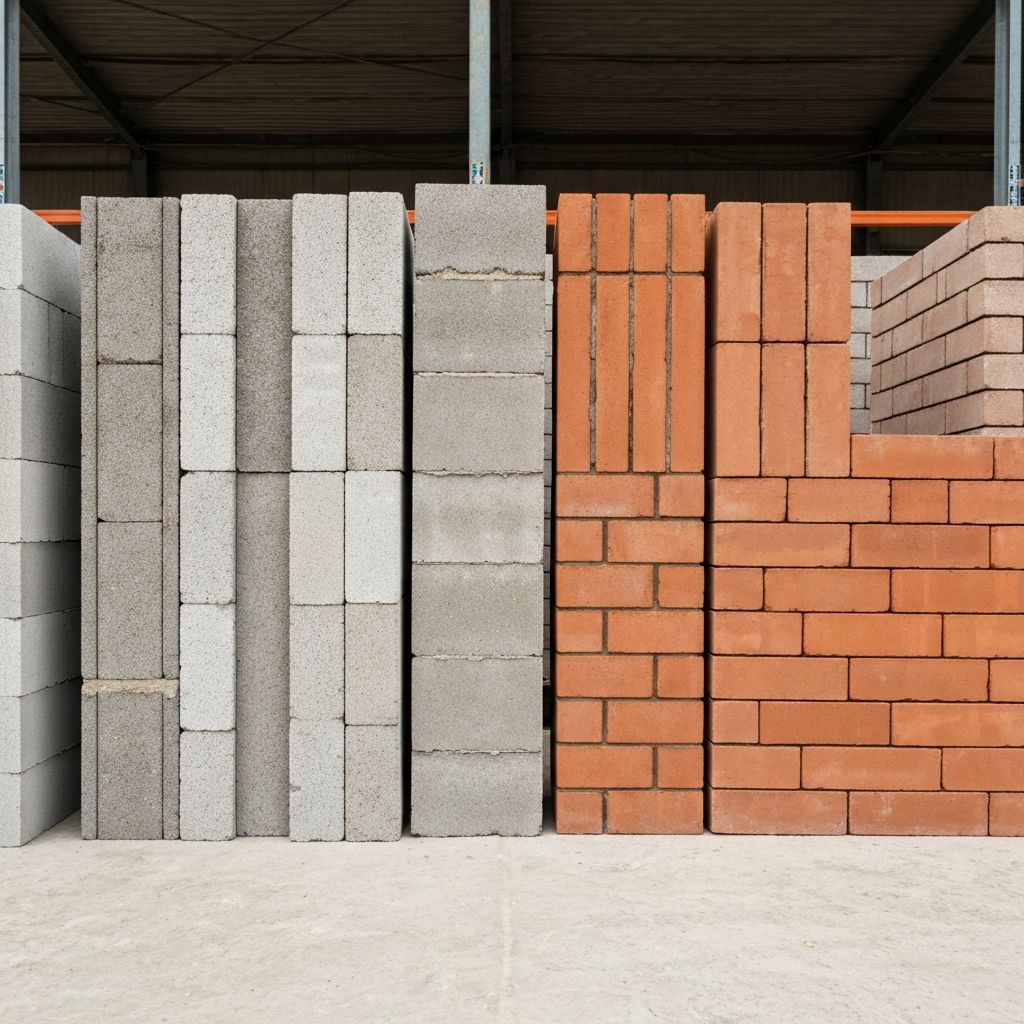
European construction traditionally uses masonry units for non-load-bearing and load-bearing walls above grade. The primary materials available include silicate blocks (calcium silicate units), aerated concrete blocks (autoclaved or non-autoclaved), concrete masonry units (CMU), expanded clay concrete blocks, clay brick units (including Porotherm cavity blocks), and engineering bricks. Each material offers different density, strength, thermal properties, and acoustic performance. Material selection depends on structural requirements, thermal design, acoustic needs, cost constraints, and regional availability.
- Silicate blocks (sand-lime): Calcium silicate composite, high density, good strength
- Aerated concrete (Suporex, Ytong): Lightweight autoclaved blocks with lower density
- CMU blocks: Concrete masonry units, various densities and strength grades
- Expanded clay blocks: Lightweight aggregate concrete offering thermal benefits
- Clay blocks (Porotherm): Ceramic fired units, sometimes with air cavities for thermal performance
- Engineering bricks: High-strength clay units for structural and aesthetic applications
Strength Characteristics and Load-Bearing Capacity
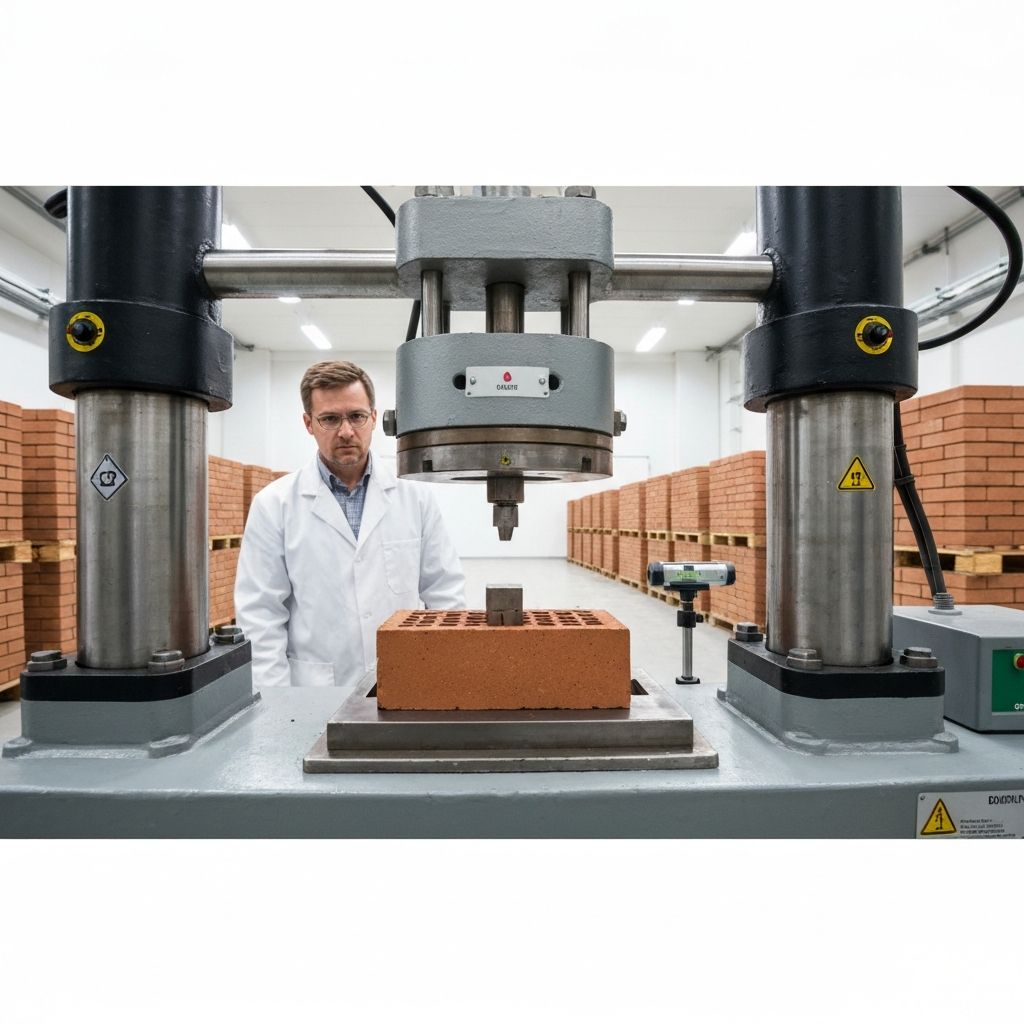
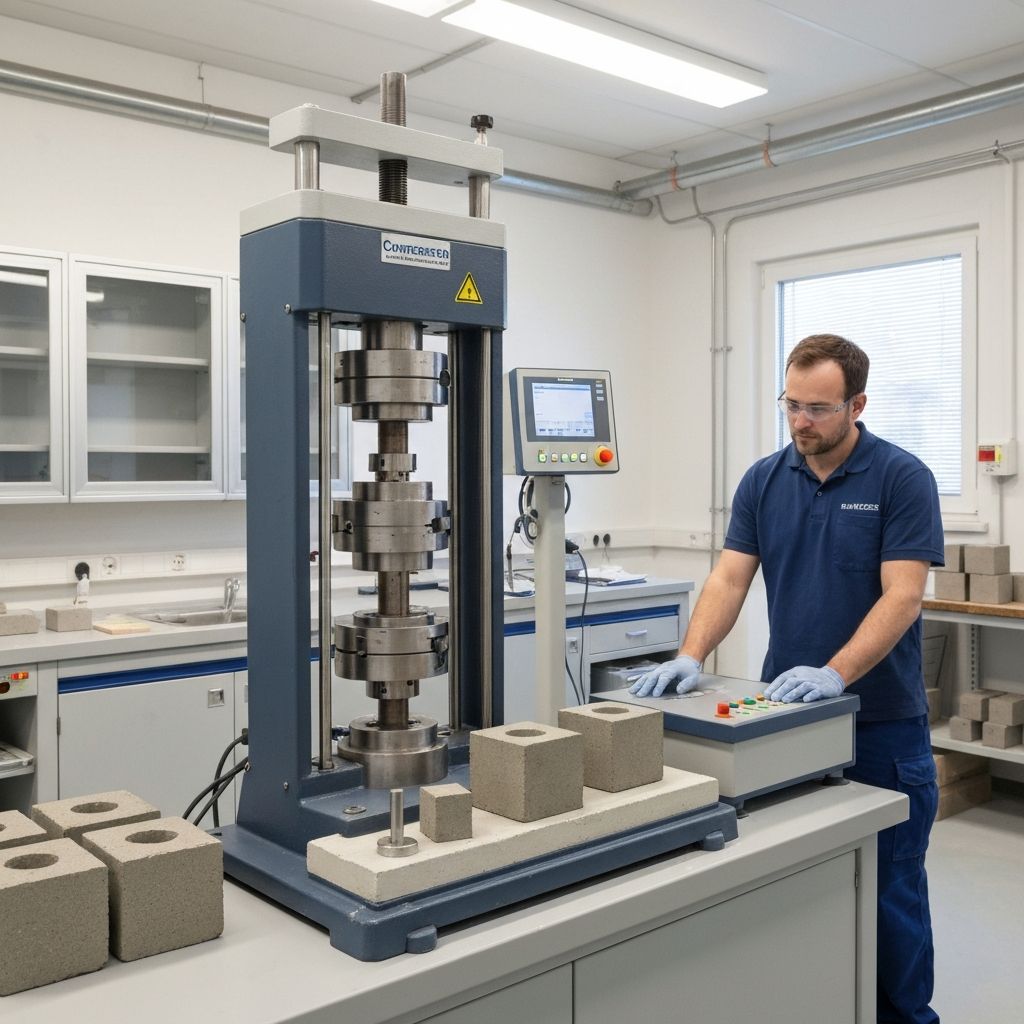
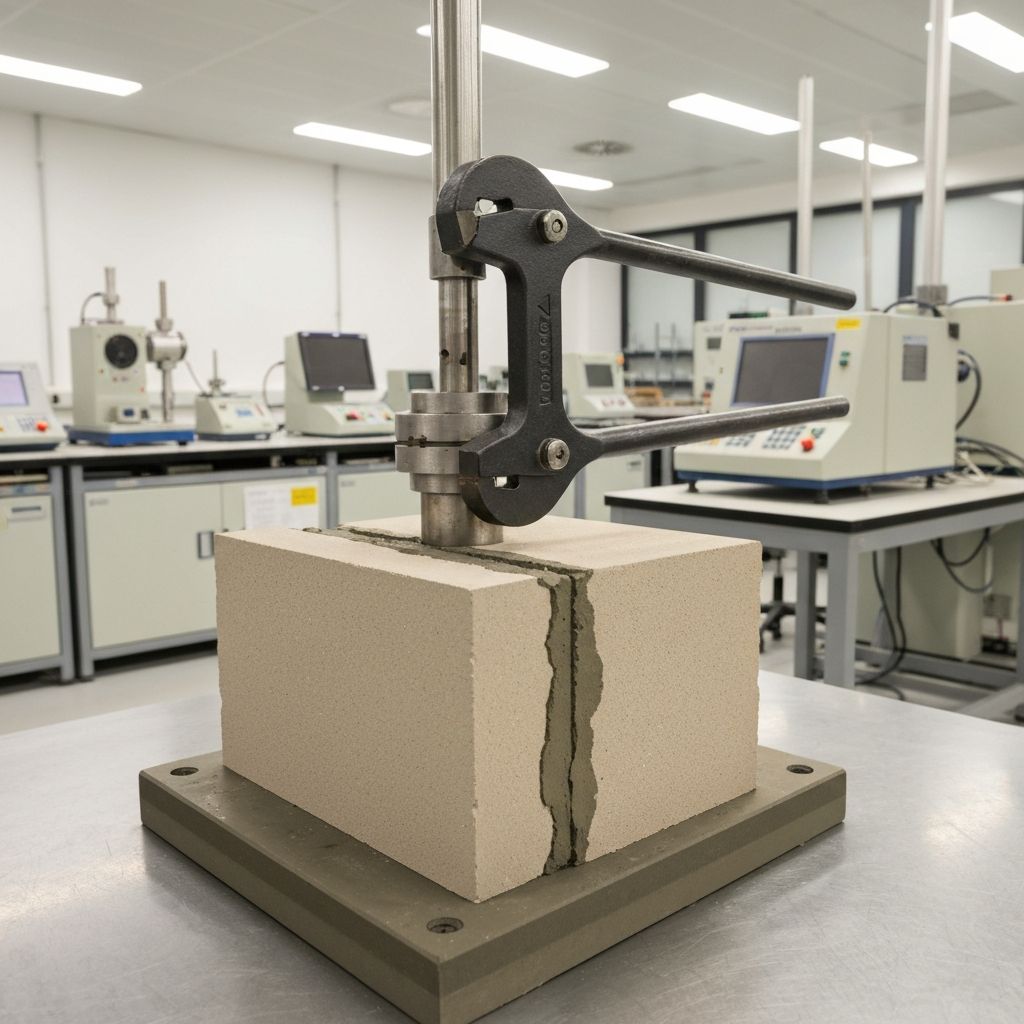
Compressive strength varies significantly among masonry materials. Silicate blocks typically achieve 12-20 N/mm² (cube strength), while aerated concrete ranges 3-7 N/mm² depending on density class (D400-D700). CMU blocks typically range 7-20 N/mm² for standard applications, while expanded clay concrete offers 4-8 N/mm² depending on density. Clay blocks (Porotherm) achieve 10-15 N/mm², and engineering bricks reach 50-100+ N/mm² for high-performance applications. However, actual wall strength depends not only on unit strength but also on mortar type, joint thickness, and bonding pattern. EN 1996-1-1 (Eurocode 6) provides calculation procedures accounting for unit strength, mortar strength, and block geometry to determine actual masonry wall capacity.
- Silicate blocks: 12-20 N/mm² (high strength, 2000-2400 kg/m³ density)
- Aerated concrete (D500): 3.5-5.0 N/mm² (lightweight, 500 kg/m³ density)
- CMU blocks: 7-20 N/mm² (medium density, 1600-2100 kg/m³)
- Expanded clay concrete: 4-8 N/mm² (lightweight, 1000-1400 kg/m³)
- Porotherm clay blocks: 10-15 N/mm² (1400-1800 kg/m³)
- Engineering bricks: 50-100+ N/mm² (dense, 2200-2400 kg/m³)
Material Cost and Installation Complexity Comparison
Material costs and installation labor requirements vary significantly among masonry units. The following comparison uses a 5-star rating system to provide relative value: 1-star (lowest cost/least labor intensive) to 5-star (highest cost/most labor intensive). This allows designers to compare materials independent of regional pricing variations. Total project cost depends on both material and labor considerations, and material selection should reflect actual structural and thermal requirements rather than aesthetic preferences.
- Silicate blocks: Material cost ★★☆☆☆ (2/5), Labor intensity ★★☆☆☆ (2/5) - Economical, moderate installation
- Aerated concrete (AAC): Material cost ★★★☆☆ (3/5), Labor intensity ★★★★☆ (4/5) - Lightweight but requires precision
- CMU blocks: Material cost ★★☆☆☆ (2/5), Labor intensity ★★☆☆☆ (2/5) - Most economical, straightforward installation
- Expanded clay concrete: Material cost ★★★★☆ (4/5), Labor intensity ★★★☆☆ (3/5) - Higher cost, moderate labor
- Porotherm clay blocks: Material cost ★★★★☆ (4/5), Labor intensity ★★★☆☆ (3/5) - Premium thermal design included
- Engineering bricks: Material cost ★★★★★ (5/5), Labor intensity ★★★★☆ (4/5) - Highest cost, specialized applications
Value Engineering Strategies for Structural Walls
Significant cost savings are achievable through intelligent material selection and structural optimization without compromising performance. The most cost-effective strategy involves using lower-strength, lower-cost materials where structural demand permits, reserving premium materials for high-load zones.
Strategy 1: Optimize Thickness and Strength
Single-wythe walls reduce material cost compared to cavity walls, but limit thermal performance and water management. For load-bearing applications, engineer the minimum thickness meeting structural requirements. Ground floor walls carrying multiple floors above can use higher-strength silicate blocks or CMU. Upper floor walls with lower loads can use lighter materials (aerated concrete or expanded clay) reducing weight and cost. A mixed strategy—silicate blocks ground floors, aerated concrete upper floors—reduces total material cost by 15-20% while maintaining structural safety. Avoid over-specifying strength for aesthetic or habit reasons; let structural analysis drive material selection.
- Ground floor: Silicate or CMU blocks (high strength) - Most economical
- Upper floors: Aerated concrete or expanded clay (adequate strength, lighter weight) - Good value
- Total cost reduction: 15-25% versus uniform high-strength specification
- Verify structural capacity at interfaces where material changes
Strategy 2: Efficient Thermal Design
Thermal resistance requirements drive material selection significantly. Rather than relying on thick aerated concrete for all thermal performance, use economical materials (silicate blocks or CMU) with external insulation. This combination achieves superior thermal performance and avoids water absorption issues of uninsulated cellular concrete. External insulation strategies reduce total cost 20-30% compared to thick aerated concrete solutions while delivering better moisture management.
- Silicate blocks + external insulation: Better thermal control, lower total cost
- Aerated concrete thickly specified for thermal properties: Higher material cost, condensation risk
- Expanded clay blocks: Moderate thermal value at higher cost than silicate + insulation
- External insulation strategy achieves better performance and significant cost savings
Strategy 3: Reduce Structural Redundancy
Many designs over-specify wall materials from conservative practice. EN 1996-1-1 enables precise calculation of wall capacity based on unit strength, mortar properties, and geometry. Buildings designed to actual calculated capacity rather than prescriptive rules can often reduce wall material strength classes, saving 10-15% on material cost without safety reduction. Additionally, strategic use of reinforced concrete columns or bond beams rather than relying entirely on masonry capacity can optimize economics—accepting a reinforced concrete element at load concentrations while using economical unreinforced masonry elsewhere.
- Verify actual structural demands per floor level rather than assuming uniform specification
- Use reinforced concrete columns at load concentrations
- Apply lower-strength materials where EN 1996 calculations permit
- Typical savings: 10-15% through optimized design
Strategy 4: Material Sequencing and Staging
Phased construction timing affects material pricing. Bulk purchases at project start lock in prices for steady-state construction. However, delayed phases (completed 1-2 years later) may access new lower-cost products or supplier competitive pressure. Value engineering can sometimes defer non-critical walls to later phases, accessing better pricing. Additionally, materials with longer lead times (engineering bricks, custom Porotherm cavity blocks) should be purchased earliest; commodity materials (standard CMU, silicate blocks) can be procured later as pricing information becomes available.
Strategy 5: Labor Efficiency and Installation Methods
Labor costs typically represent 60-70% of total wall installation cost. Material selection significantly affects labor productivity. Larger units (silicate blocks, Porotherm cavity blocks) install faster than smaller units, reducing labor cost per square meter despite similar material prices. AAC blocks (aerated concrete) are lightweight (reducing physical strain and installation time) but require careful handling and precise installation. CMU blocks represent a middle ground—moderate productivity, moderate labor cost. Consider productivity metrics: experienced masons install 8-12 m²/day with silicate blocks, 6-10 m²/day with aerated concrete (due to precision requirements), and 10-14 m²/day with larger-format blocks. Choosing high-productivity materials can reduce total installed cost 10-20% despite slightly higher material costs.
Comparative Economics: Case Study Example
A 5-story residential building with 4,000 m² of exterior walls exemplifies value engineering. Conservative approach: uniform aerated concrete D500 throughout delivers consistent thermal performance but with highest labor requirements and moderate material cost. Optimized approach: Ground floor uses economical silicate blocks with high structural capacity, upper floors use aerated concrete with external insulation for thermal performance while reducing dead load. This mixed-material strategy achieves (a) structural capacity precisely matched to loads, (b) superior thermal performance with external facade, (c) better moisture control, and (d) cost savings of 15-25% versus uniform specification. Further optimization using CMU blocks on upper floors (with lower labor intensity) reduces overall project cost by an additional 10-15%.
Standards and Regulatory Compliance
All materials must comply with relevant European standards. Silicate blocks: EN 771-2. Aerated concrete: EN 771-4 or EN 12602 for structural design. CMU: EN 771-3. Expanded clay concrete: EN 771-3 or manufacturer's technical approvals. Clay bricks and blocks: EN 771-1. Structural design: EN 1996-1-1 (Eurocode 6). Thermal design: EN 13370, EN ISO 6946. Water management: EN 13369, regional building code requirements. Each material requires appropriate mortar type (EN 998-2 for masonry mortar), joint design, movement control, and water management strategies. Compliance must precede value engineering decisions.
Conclusion
Structural wall material selection significantly impacts project cost, performance, and schedule. Rather than defaulting to single-material specifications, value engineering through material optimization, thickness reduction, thermal performance targeting, and labor-efficient installation methods can achieve significant cost savings while improving actual structural and thermal performance. VSG's structural engineering expertise includes masonry design optimization, material specification for cost efficiency, and value engineering across residential, commercial, and industrial projects. We deliver designs that balance structural integrity, thermal compliance, water management, and material economics. Contact VSG to discuss optimized structural wall design for your European project.
Related Testing Services
- Masonry Compressive Strength Testing
- Mortar Bond Testing
- Thermal Transmittance Measurement
- Water Absorption Testing
- Acoustic Performance Analysis
Applicable Standards
Professional Engineering Support
This testing and verification work is part of comprehensive construction management and quality assurance services provided by our architectural and engineering consulting team. We support project management, quality control, and commissioning across military, nuclear, infrastructure, and commercial sectors.
Request Engineering Services